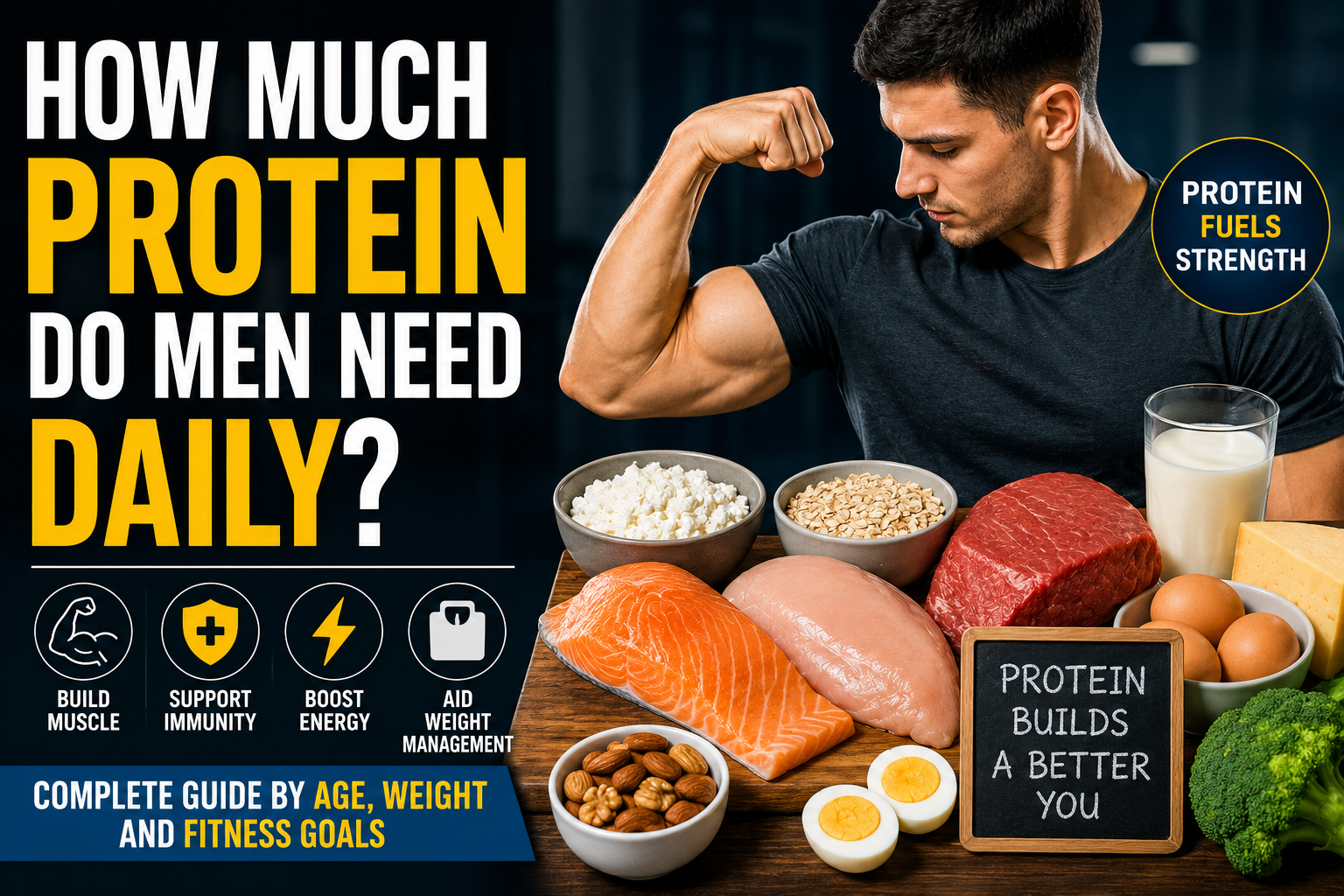
Protein is one of the most important nutrients for men’s health. It helps build and repair muscles, supports hormone production, strengthens the immune system, and plays a crucial role in maintaining overall health. Despite its importance, many men are unsure about how much protein they actually need each day.
Some people believe that eating more protein automatically leads to bigger muscles, while others worry that too much protein may be harmful. The truth lies somewhere in between. The ideal protein intake depends on factors such as age, body weight, activity level, and fitness goals.
In this guide, we’ll explore how much protein men need daily, how to calculate your requirements, the best protein sources, and whether you can eat too much protein.
What Is Protein and Why Is It Important?
Protein is one of the three essential macronutrients, alongside carbohydrates and fats.
It is made up of amino acids, which are often called the building blocks of life because they help:
- Build and repair muscle tissue
- Support healthy bones
- Produce enzymes and hormones
- Maintain skin, hair, and nails
- Support immune function
- Promote recovery after exercise
Unlike fats and carbohydrates, the body does not store large amounts of protein, which is why regular intake is important.
How Much Protein Do Men Need Daily?
According to general nutrition guidelines, the Recommended Dietary Allowance (RDA) for protein is:
0.8 grams of protein per kilogram of body weight per day
or
0.36 grams per pound of body weight
This amount is considered sufficient for most sedentary adults.
Example
A man weighing 70 kg (154 lbs) would need approximately:
70 × 0.8 = 56 grams of protein per day
However, this is the minimum amount required to prevent deficiency, not necessarily the optimal amount for health, fitness, or muscle growth.
Daily Protein Needs Based on Activity Level
Sedentary Men
If you rarely exercise:
0.8–1.0 g/kg
Example:
- 70 kg man = 56–70 g protein daily
Active Men
If you exercise several times per week:
1.2–1.6 g/kg
Example:
- 70 kg man = 84–112 g protein daily
Men Focused on Muscle Building
For strength training and muscle growth:
1.6–2.2 g/kg
Example:
- 70 kg man = 112–154 g protein daily
Men Trying to Lose Weight
Higher protein intake may help preserve muscle while reducing body fat.
1.6–2.4 g/kg
Example:
- 70 kg man = 112–168 g protein daily
Protein Requirements by Age
Men Ages 18–30
Young adults often require more protein due to higher activity levels and muscle-building potential.
Recommended:
1.2–2.0 g/kg
Men Ages 30–50
Protein becomes increasingly important for maintaining muscle mass.
Recommended:
1.2–1.8 g/kg
Men Over 50
Aging naturally leads to muscle loss, known as sarcopenia.
Many experts recommend:
1.2–2.0 g/kg
to help preserve strength and mobility.
How to Calculate Your Daily Protein Intake
Use this simple formula:
Body Weight (kg) × Protein Requirement
Example 1
Weight: 80 kg
Moderately active:
80 × 1.4 = 112 grams daily
Example 2
Weight: 90 kg
Muscle-building goal:
90 × 2.0 = 180 grams daily
Signs You May Not Be Eating Enough Protein
Protein deficiency is uncommon in developed countries, but many men still consume less than optimal amounts.
Possible signs include:
- Muscle loss
- Slow recovery from workouts
- Constant hunger
- Weakness
- Fatigue
- Frequent illness
- Hair thinning
- Poor wound healing
Best High-Protein Foods for Men
Animal-Based Protein Sources
Chicken Breast
Protein: ~31g per 100g
Eggs
Protein: ~6g per egg
Fish
Protein: 20–25g per serving
Greek Yogurt
Protein: 15–20g per serving
Lean Beef
Protein: 25–30g per serving
Plant-Based Protein Sources
Lentils
Protein: ~18g per cup
Chickpeas
Protein: ~15g per cup
Tofu
Protein: ~10–20g per serving
Quinoa
Protein: ~8g per cup
Edamame
Protein: ~18g per cup
How Much Protein Do Men Need to Build Muscle?
This is one of the most searched questions in men’s health.
Research suggests that muscle growth is maximized at approximately:
1.6–2.2 grams per kilogram of body weight
For most men:
- 120–180 grams per day is sufficient
- Consistency matters more than consuming huge amounts in one meal
Strength training combined with adequate protein intake produces the best results.
Is More Protein Always Better?
Not necessarily.
While protein is important, consuming excessive amounts does not guarantee faster muscle growth.
The body can only use a certain amount efficiently for muscle-building purposes.
Excess calories from any source, including protein, may contribute to weight gain if overall calorie intake exceeds your needs.
Should You Use Protein Supplements?
Protein supplements can be helpful if you’re struggling to meet your daily needs through food alone.
Popular options include:
- Whey protein
- Casein protein
- Plant-based protein powders
- Protein shakes
However, whole foods should remain the foundation of your diet whenever possible.
Best Times to Eat Protein
Rather than consuming all your protein at once, it may be beneficial to spread it throughout the day.
Aim for protein at:
- Breakfast
- Lunch
- Dinner
- Post-workout meals
- Healthy snacks
Many experts recommend 20–40 grams of protein per meal.
Common Protein Myths
Myth 1: More Protein Means More Muscle
Muscle growth also depends on training, recovery, sleep, and overall nutrition.
Myth 2: Only Athletes Need Protein
Everyone needs protein for basic bodily functions.
Myth 3: Protein Supplements Are Necessary
Many people can meet their protein needs through regular foods.
Myth 4: High-Protein Diets Are Dangerous for Healthy People
Current research suggests that higher protein diets are generally safe for healthy individuals, though people with kidney disease should follow medical advice.
Practical Daily Protein Examples
70 kg (154 lb) Man
Moderately active:
90–110 grams per day
80 kg (176 lb) Man
Strength training:
130–160 grams per day
90 kg (198 lb) Man
Fat loss and muscle retention:
150–180 grams per day
Conclusion
Protein is a vital nutrient for men’s health, supporting muscle growth, recovery, hormone production, immune function, and healthy aging. While the minimum recommended intake for most men is around 0.8 grams per kilogram of body weight, active men and those focused on fitness often benefit from significantly higher amounts.
The ideal protein intake depends on your age, body weight, activity level, and goals. Most active men thrive on 1.2–2.2 grams of protein per kilogram of body weight daily. By combining high-quality protein sources with regular exercise, good sleep, and a balanced diet, you can support long-term health and performance.
Frequently Asked Questions (FAQs)
1. How much protein does the average man need per day?
Most men need at least 0.8 grams of protein per kilogram of body weight daily, though active men often require more.
2. Is 100 grams of protein enough for a man?
For many moderately active men, yes. However, larger individuals and those building muscle may require more.
3. How much protein should a man eat to build muscle?
Most research supports 1.6–2.2 grams of protein per kilogram of body weight for muscle growth.
4. Can eating too much protein be harmful?
For healthy individuals, higher protein diets are generally safe. However, people with kidney disease should consult a healthcare professional.
5. What are the best protein-rich foods for men?
Chicken, eggs, fish, Greek yogurt, lean beef, lentils, tofu, chickpeas, and protein-rich dairy products.
6. Should men over 50 eat more protein?
Yes. Higher protein intake may help preserve muscle mass and strength as men age.
7. Is whey protein better than food?
No. Whole foods should be the primary protein source, while whey protein can be a convenient supplement.
8. Can protein help with weight loss?
Yes. Protein may increase fullness, reduce hunger, and help preserve muscle during weight loss.