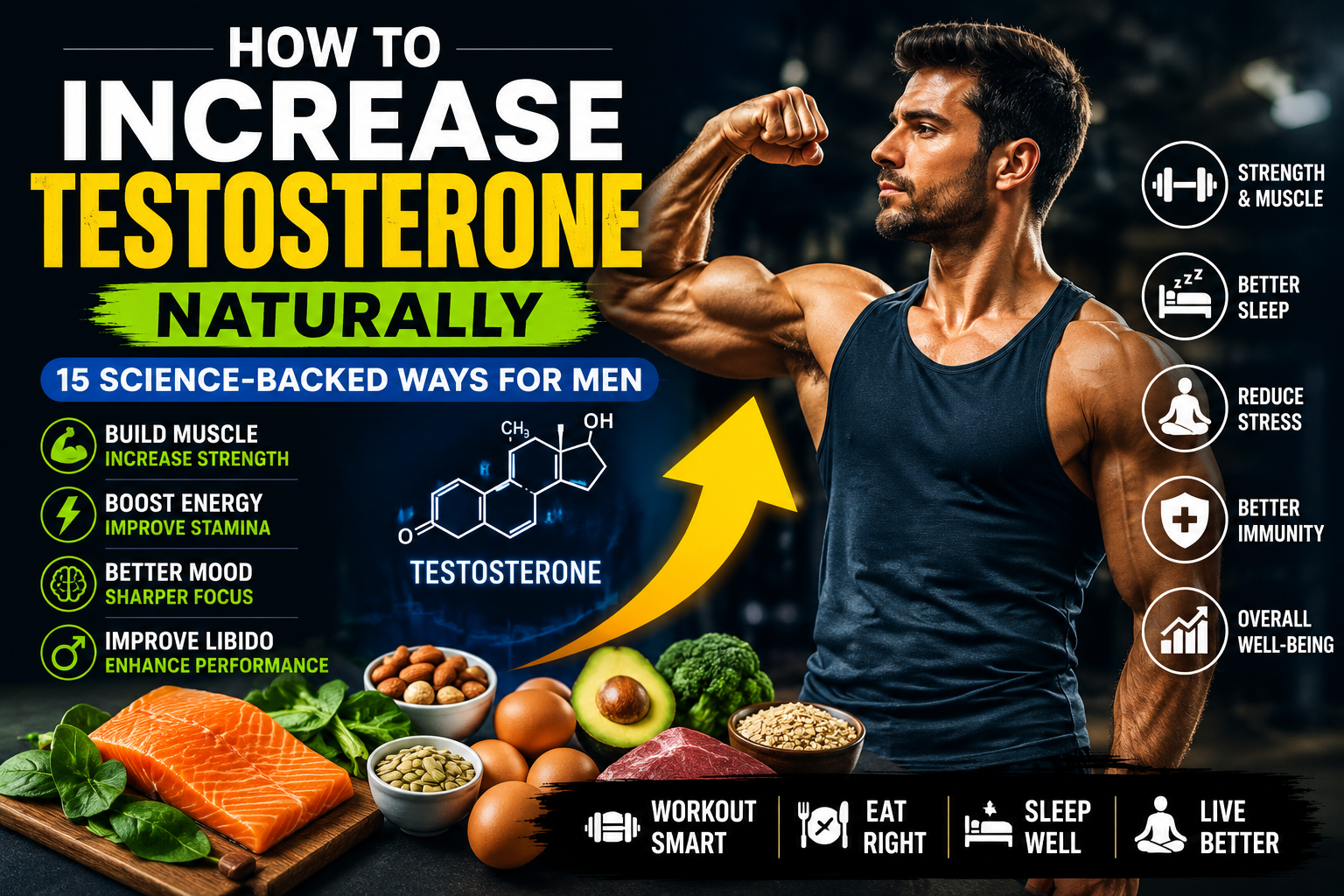
Testosterone is often called the primary male hormone, and for good reason. It plays a crucial role in muscle growth, fat distribution, bone density, energy levels, mood, libido, and overall health. While testosterone naturally declines with age, many modern lifestyle factors—such as poor sleep, chronic stress, obesity, and inactivity—can accelerate this decline. As a result, many men look for safe and effective ways to increase testosterone naturally and maintain optimal health. Fortunately, scientific research shows that certain lifestyle changes, dietary habits, and exercise strategies can help increase testosterone levels without relying on medications. Understanding how to increase testosterone naturally can improve energy, physical performance, muscle development, and overall well-being.
Low testosterone levels can lead to fatigue, reduced muscle mass, increased body fat, low sex drive, poor concentration, and decreased motivation. Fortunately, there are several natural, science-backed strategies that can help optimize testosterone production without relying on medications or supplements.
In this guide, we’ll explore 15 proven ways to increase testosterone naturally and improve your overall health and performance.
What Is Testosterone?
Testosterone is a hormone primarily produced in the testicles in men and, to a lesser extent, in the adrenal glands.
It helps regulate:
- Muscle mass and strength
- Bone density
- Red blood cell production
- Sexual function and libido
- Mood and confidence
- Fat distribution
- Energy levels
Testosterone levels typically peak during late adolescence and early adulthood before gradually declining by approximately 1% per year after age 30.
Signs of Low Testosterone
Before focusing on increasing testosterone, it’s important to recognize common symptoms of low testosterone.
Common Signs Include:
- Low sex drive
- Erectile dysfunction
- Chronic fatigue
- Increased belly fat
- Reduced muscle mass
- Mood changes
- Depression or irritability
- Difficulty concentrating
- Decreased physical performance
- Poor recovery from workouts
If symptoms are severe, a medical evaluation and blood test are recommended.
1. Maintain a Healthy Body Weight
One of the strongest predictors of testosterone levels is body fat percentage.
Excess body fat, particularly visceral fat around the abdomen, increases the conversion of testosterone into estrogen. This can significantly lower testosterone levels over time.
What to Do:
- Aim for gradual fat loss
- Reduce processed foods
- Increase daily activity
- Follow a calorie-controlled diet
Studies consistently show that overweight men often experience improvements in testosterone after losing excess weight.
2. Lift Weights Regularly
Resistance training is one of the most effective natural testosterone boosters.
Strength training stimulates testosterone production while helping preserve muscle mass.
Best Exercises:
- Squats
- Deadlifts
- Bench Press
- Pull-Ups
- Rows
- Overhead Press
Training Tips:
- Focus on compound movements
- Train 3–5 times weekly
- Progressively increase resistance
Heavy resistance training produces the greatest hormonal response.
3. Prioritize High-Quality Sleep
Sleep is arguably the most underrated testosterone booster.
Most daily testosterone production occurs during sleep. Men who consistently sleep fewer than six hours per night often experience significantly lower testosterone levels.
Aim For:
- 7–9 hours of quality sleep
- Consistent sleep schedule
- Dark sleeping environment
- Limited screen exposure before bed
Research has shown that even one week of sleep deprivation can reduce testosterone levels noticeably.
4. Reduce Chronic Stress
Stress increases cortisol, the body’s primary stress hormone.
When cortisol remains elevated for long periods, testosterone production often decreases.
Stress Management Strategies:
- Meditation
- Deep breathing exercises
- Nature walks
- Reading
- Journaling
- Regular exercise
Lowering stress benefits both hormonal health and overall well-being.
5. Eat Enough Healthy Fats
Many men mistakenly avoid dietary fats when trying to lose weight.
However, testosterone production depends on adequate fat intake.
Healthy Fat Sources:
- Avocados
- Olive oil
- Nuts
- Seeds
- Fatty fish
- Eggs
Extremely low-fat diets may negatively impact hormone production.
6. Increase Protein Intake
Protein supports muscle growth and helps maintain a healthy body composition.
Maintaining lean muscle mass is associated with healthier testosterone levels.
Excellent Protein Sources:
- Chicken breast
- Turkey
- Fish
- Eggs
- Greek yogurt
- Cottage cheese
- Lentils
- Tofu
Most active men benefit from consuming approximately 1.6–2.2 grams of protein per kilogram of body weight daily.
7. Get Enough Vitamin D
Vitamin D functions more like a hormone than a vitamin and plays an important role in testosterone production.
Unfortunately, vitamin D deficiency is common worldwide.
Sources of Vitamin D:
- Sunlight exposure
- Fatty fish
- Egg yolks
- Fortified foods
Aim for 15–30 minutes of sunlight exposure several times per week when possible.
8. Consume Zinc-Rich Foods
Zinc is essential for testosterone production and reproductive health.
A deficiency may contribute to lower testosterone levels.
Best Zinc Sources:
- Oysters
- Beef
- Pumpkin seeds
- Chickpeas
- Nuts
- Dairy products
Maintaining adequate zinc intake supports optimal hormone function.
9. Include Magnesium in Your Diet
Magnesium supports hundreds of biochemical processes within the body, including hormone regulation.
Magnesium-Rich Foods:
- Spinach
- Almonds
- Cashews
- Black beans
- Avocados
- Dark chocolate
Many adults fail to consume enough magnesium daily.
10. Limit Sugar Consumption
High sugar intake contributes to obesity, insulin resistance, and metabolic dysfunction—all factors associated with reduced testosterone.
Reduce:
- Soft drinks
- Candy
- Sweetened coffee beverages
- Processed desserts
- Sugary breakfast cereals
Replacing sugary foods with whole foods can improve overall metabolic health.
11. Avoid Excessive Alcohol Consumption
Heavy alcohol use can negatively affect testosterone production.
Alcohol may:
- Increase estrogen levels
- Reduce testosterone synthesis
- Impair recovery
- Promote fat gain
Moderation is key for maintaining hormonal health.
12. Stay Physically Active Throughout the Day
Regular movement matters beyond gym workouts.
A sedentary lifestyle can contribute to weight gain and lower testosterone levels.
Simple Ways to Stay Active:
- Walk after meals
- Take stairs instead of elevators
- Stand regularly during work
- Aim for 8,000–10,000 steps daily
Consistent movement supports long-term health and hormone balance.
13. Eat More Whole Foods
Whole foods provide essential nutrients that support hormone production.
Focus On:
- Lean proteins
- Fruits
- Vegetables
- Whole grains
- Healthy fats
Limit:
- Ultra-processed foods
- Fast food
- Excessive refined carbohydrates
A nutrient-dense diet helps create the foundation for healthy testosterone levels.
14. Improve Insulin Sensitivity
Poor insulin sensitivity is often linked to lower testosterone.
Ways to Improve Insulin Sensitivity:
- Exercise regularly
- Lose excess body fat
- Eat more fiber
- Reduce added sugars
- Sleep adequately
Improved metabolic health often leads to better hormonal balance.
15. Avoid Extreme Dieting
Crash diets and severe calorie restriction can reduce testosterone levels.
When the body perceives starvation, hormone production often declines.
Better Approach:
- Moderate calorie deficit
- Sustainable nutrition habits
- Balanced macronutrients
- Long-term consistency
Slow and steady progress typically produces better hormonal outcomes.
Foods That May Support Healthy Testosterone Levels
Top Testosterone-Friendly Foods
- Eggs
- Salmon
- Tuna
- Lean beef
- Oysters
- Spinach
- Avocados
- Pumpkin seeds
- Greek yogurt
- Pomegranates
- Brazil nuts
- Olive oil
These foods provide important nutrients such as protein, zinc, magnesium, vitamin D, and healthy fats.
Habits That Can Lower Testosterone
Avoiding these habits can be just as important as following healthy practices.
Common Testosterone Killers
- Chronic sleep deprivation
- Obesity
- Excess alcohol
- Smoking
- Sedentary lifestyle
- Extreme dieting
- Chronic stress
- Excessive sugar intake
Addressing these issues often produces noticeable improvements.
When Should You See a Doctor?
Natural strategies can help optimize testosterone levels, but some men may have medical conditions requiring professional evaluation.
Consult a healthcare provider if you experience:
- Persistent fatigue
- Severe erectile dysfunction
- Extremely low libido
- Significant muscle loss
- Depression symptoms
- Fertility concerns
A simple blood test can determine whether testosterone levels are truly low.
Conclusion
Testosterone plays a critical role in men’s physical health, mental well-being, energy levels, and overall quality of life. While testosterone naturally declines with age, lifestyle factors often have a much greater impact than many people realize.
The good news is that most men can naturally support healthy testosterone levels by maintaining a healthy weight, exercising regularly, prioritizing sleep, managing stress, eating nutrient-rich foods, and avoiding habits that negatively affect hormone production.
Instead of searching for quick fixes or miracle supplements, focus on consistent, evidence-based habits. Over time, these changes can improve testosterone levels, increase energy, enhance physical performance, and support long-term health.
Frequently Asked Questions (FAQs)
1. What is the fastest natural way to increase testosterone?
The most effective approach combines strength training, quality sleep, healthy body weight management, adequate protein intake, and stress reduction.
2. Which foods increase testosterone naturally?
Foods rich in protein, healthy fats, zinc, magnesium, and vitamin D—such as eggs, salmon, oysters, spinach, avocados, and nuts—can support healthy testosterone production.
3. Does exercise increase testosterone?
Yes. Resistance training, especially compound exercises like squats and deadlifts, can temporarily boost testosterone and support long-term hormonal health.
4. Can losing belly fat increase testosterone?
Yes. Excess body fat is associated with lower testosterone levels. Losing belly fat can improve hormone balance and testosterone production.
5. How much sleep is needed for healthy testosterone levels?
Most men should aim for 7–9 hours of quality sleep per night to support optimal testosterone production.
6. Does stress lower testosterone?
Chronic stress increases cortisol levels, which can interfere with testosterone production and overall hormonal health.
7. Are testosterone boosters effective?
Many commercial testosterone boosters have limited scientific support. Lifestyle changes remain the most reliable natural method for improving testosterone levels.
8. Does age affect testosterone levels?
Yes. Testosterone levels typically decline gradually after age 30, although healthy lifestyle habits can help slow this decline.
9. Can vitamin D increase testosterone?
Research suggests that correcting vitamin D deficiency may help support healthy testosterone levels in some men.
10. When should I get my testosterone levels tested?
If you experience symptoms such as low libido, fatigue, muscle loss, mood changes, or erectile dysfunction, consult a healthcare professional and consider a hormone evaluation.