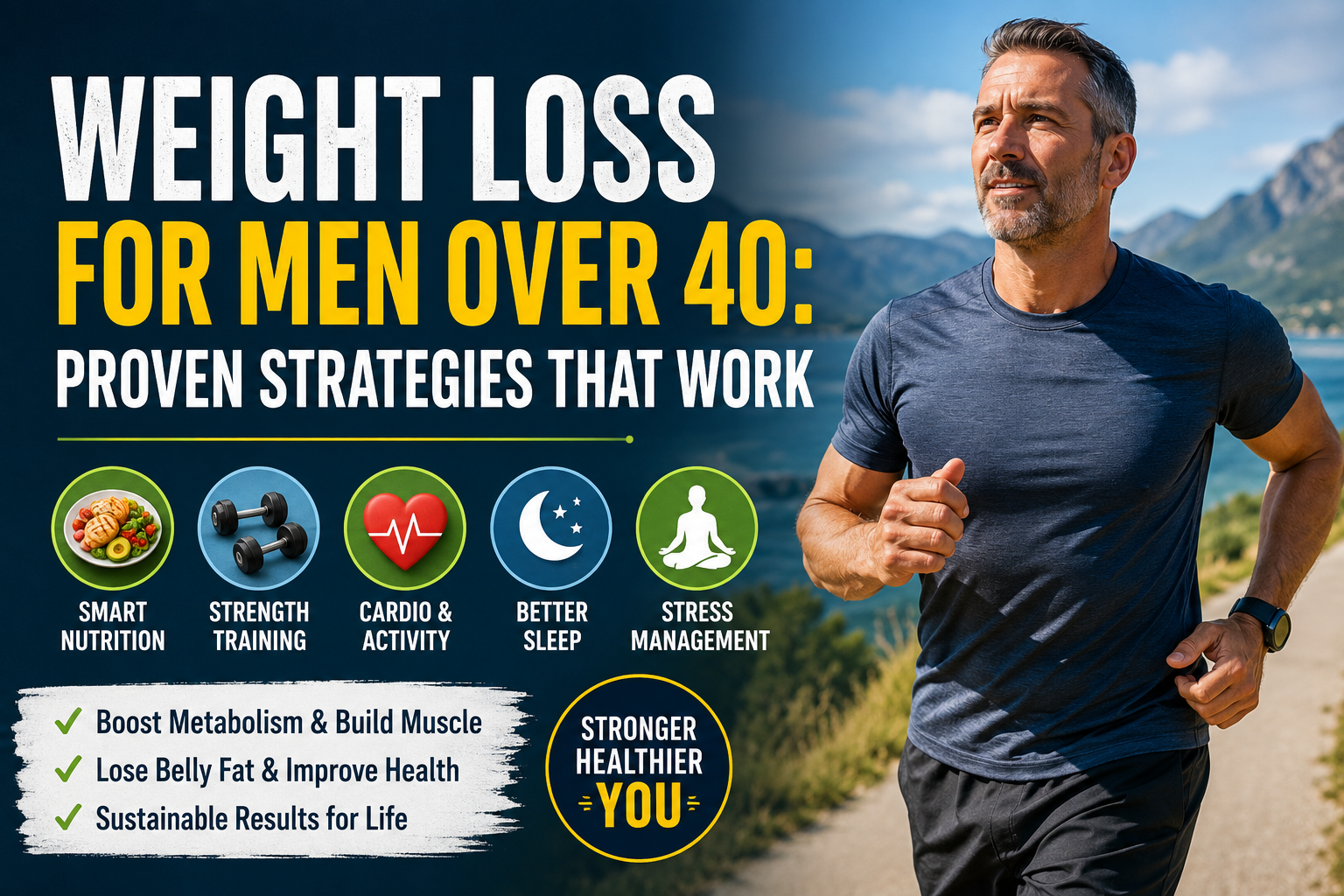
If you’re struggling with weight loss for men after 40, you’re not alone. Many men notice that the strategies that worked in their 20s and 30s no longer produce the same results. Extra belly fat appears more easily, energy levels decline, and losing weight becomes increasingly difficult.
The good news is that successful weight loss for men over 40 is absolutely achievable. While aging brings certain biological changes, modern research shows that the right combination of nutrition, strength training, sleep, and lifestyle habits can help men lose fat, maintain muscle, and improve overall health.
This comprehensive guide explains why weight gain becomes more common after 40 and provides practical, science-backed strategies that actually work.
Why Weight Loss Gets Harder for Men After 40
Many men believe their metabolism suddenly “shuts down” after 40. While metabolism does change with age, several factors contribute to weight gain.
Age-Related Muscle Loss (Sarcopenia)
One of the biggest reasons men gain weight after 40 is sarcopenia, the gradual loss of muscle mass that occurs with aging.
Since muscle burns more calories than fat, losing muscle can slightly reduce daily calorie expenditure.
Without strength training, men may lose muscle every decade after age 30.
Signs of Muscle Loss
- Reduced strength
- Lower energy levels
- Slower recovery
- Increased body fat percentage
- Difficulty maintaining weight
Testosterone Changes and Fat Gain
Testosterone naturally declines with age.
Lower testosterone levels may contribute to:
- Increased abdominal fat
- Reduced muscle mass
- Lower motivation
- Decreased exercise performance
While hormonal changes matter, lifestyle habits still have the greatest impact on weight management.
Also Read – How to Increase Testosterone Naturally: 15 Science-Backed Ways for Men
Increased Stress and Cortisol
Many men over 40 face growing responsibilities at work and home.
Chronic stress can increase cortisol levels, which may contribute to:
- Increased hunger
- Emotional eating
- Belly fat accumulation
- Poor sleep quality
Managing stress becomes an important part of any successful weight-loss plan.
Weight Loss for Men Over 40: What Science Says
Research consistently shows that sustainable weight loss comes from long-term habit changes rather than quick fixes.
The most successful men focus on:
- Creating a moderate calorie deficit
- Preserving muscle mass
- Increasing physical activity
- Improving sleep
- Managing stress
Create a Moderate Calorie Deficit
Weight loss occurs when you consistently burn more calories than you consume.
However, extreme calorie restriction often backfires.
Instead of crash dieting:
✅ Reduce calories moderately
✅ Focus on food quality
✅ Increase activity levels
✅ Aim for sustainable progress
A healthy rate of weight loss is typically:
1–2 pounds (0.5–1 kg) per week
Increase Protein Intake
Protein is arguably the most important nutrient for weight loss for men over 40.
Benefits include:
- Increased satiety
- Better muscle retention
- Higher calorie burn during digestion
- Improved recovery after workouts
High-Protein Foods
Animal Sources
- Chicken breast
- Turkey
- Eggs
- Greek yogurt
- Fish
- Lean beef
Plant Sources
- Lentils
- Chickpeas
- Tofu
- Edamame
- Beans
Many experts recommend consuming protein at every meal.
Best Diet for Men Over 40
There is no single “perfect” diet.
The best diet is one you can maintain consistently.
Foods to Eat More Often
Lean Proteins
Protein supports fat loss while preserving muscle.
Examples:
- Fish
- Eggs
- Chicken
- Turkey
- Low-fat dairy
Vegetables
Vegetables provide:
- Fiber
- Vitamins
- Minerals
- Low-calorie volume
Aim to fill half your plate with vegetables whenever possible.
Fruits
Fruits provide natural sweetness and valuable nutrients.
Excellent choices include:
- Berries
- Apples
- Oranges
- Pears
- Kiwi
Healthy Fats
Healthy fats support hormone production and overall health.
Examples:
- Avocados
- Olive oil
- Nuts
- Seeds
- Fatty fish
Foods to Limit
Sugary Drinks
Liquid calories add up quickly.
Limit:
- Soda
- Energy drinks
- Sweetened coffee beverages
Processed Foods
Many processed foods are high in calories and low in nutrients.
Excess Alcohol
Alcohol contributes to:
- Extra calories
- Poor food choices
- Increased belly fat
Reducing alcohol intake often accelerates fat loss.
7-Day Weight Loss Meal Plan for Men Over 40
Day 1
Breakfast
Vegetable omelet with whole-grain toast
Lunch
Grilled chicken salad
Dinner
Salmon, brown rice, and vegetables
Snack
Greek yogurt
Day 2
Breakfast
Oatmeal with berries
Lunch
Turkey wrap with vegetables
Dinner
Lean beef stir-fry
Snack
Apple and almonds
Day 3
Breakfast
Protein smoothie
Lunch
Tuna salad
Dinner
Grilled chicken with sweet potatoes
Snack
Cottage cheese
Continue rotating similar meals while focusing on protein, vegetables, and whole foods.
Check This – Men With Health: Men’s Wellness, Fitness, and Healthy Living
Best Exercises for Men Over 40 to Lose Weight
Exercise becomes increasingly important with age.
Strength Training
Strength training helps:
- Preserve muscle
- Increase metabolism
- Improve body composition
- Support healthy aging
Best Strength Exercises
- Squats
- Deadlifts
- Push-ups
- Bench press
- Rows
- Lunges
Aim for 2–4 sessions weekly.
Walking for Fat Loss
Walking is one of the most underrated weight-loss tools.
Benefits:
- Low injury risk
- Improves heart health
- Burns calories
- Reduces stress
Many experts recommend aiming for:
8,000–10,000 steps daily
HIIT Workouts
High-Intensity Interval Training (HIIT) can help increase calorie burn in a shorter amount of time.
Example:
- 30 seconds fast effort
- 90 seconds recovery
- Repeat 8–10 rounds
Always consult a healthcare professional before beginning intense exercise programs.
How to Lose Belly Fat for Men Over 40
One of the most common goals is reducing abdominal fat.
Unfortunately, spot reduction is a myth.
You cannot specifically burn fat from your stomach alone.
Instead:
Focus on Total Body Fat Loss
Combine:
- Healthy eating
- Strength training
- Cardio
- Sleep
- Stress management
Increase Daily Activity
Take stairs whenever possible.
Walk after meals.
Stand more frequently throughout the day.
Sleep More
Poor sleep is strongly associated with increased belly fat.
Aim for:
7–9 hours of quality sleep nightly.
Common Weight-Loss Mistakes Men Over 40 Make
Following Crash Diets
Extreme diets rarely provide lasting results.
Most people regain the weight once normal eating resumes.
Ignoring Strength Training
Cardio alone is often insufficient.
Strength training helps preserve valuable muscle mass.
Consuming Too Little Protein
Insufficient protein can increase muscle loss during dieting.
Relying on Supplements
No supplement can replace:
- Proper nutrition
- Exercise
- Sleep
- Consistency
Expecting Immediate Results
Healthy weight loss takes time.
Small improvements repeated consistently produce the best long-term outcomes.
The Importance of Sleep for Weight Loss
Sleep directly influences:
- Hunger hormones
- Recovery
- Energy levels
- Decision-making
Men who regularly sleep less than 6 hours often struggle more with fat loss.
Better Sleep Tips
- Maintain a regular bedtime
- Limit screen exposure before bed
- Avoid heavy meals late at night
- Keep the room cool and dark
Stress Management and Weight Loss
Stress can undermine even the best diet.
Helpful stress-management techniques include:
- Meditation
- Deep breathing
- Walking outdoors
- Exercise
- Reading
- Spending time with family
Even 10–15 minutes daily can make a difference.
When Men Over 40 Should Talk to a Doctor
Consider professional guidance if you experience:
- Rapid unexplained weight gain
- Severe fatigue
- Symptoms of low testosterone
- Sleep apnea
- Diabetes risk factors
- Thyroid concerns
Medical conditions can sometimes contribute to weight-management challenges.
Expert Tips for Sustainable Weight Loss
1. Focus on Habits, Not Perfection
Consistency beats perfection.
2. Eat Protein First
Protein improves fullness and supports muscle retention.
3. Lift Weights Regularly
Strength training becomes more important with age.
4. Walk Every Day
Daily movement supports long-term fat loss.
5. Track Progress Weekly
Monitor:
- Body weight
- Waist measurements
- Strength improvements
Conclusion
Weight loss for men over 40 is not about following extreme diets or spending hours in the gym. The most effective approach combines a protein-rich diet, strength training, regular physical activity, quality sleep, and stress management.
While age-related changes can make weight loss more challenging, they do not make it impossible. Men who focus on sustainable habits and long-term consistency can lose fat, maintain muscle, improve energy levels, and enjoy better overall health.
The key is to start small, stay consistent, and focus on progress rather than perfection.
Frequently Asked Questions (FAQs)
Is weight loss harder for men after 40?
Yes. Age-related muscle loss, hormonal changes, lower activity levels, and lifestyle factors can make weight loss more challenging.
What is the best diet for men over 40?
A diet rich in lean protein, vegetables, fruits, healthy fats, and whole grains is generally considered one of the best approaches for sustainable weight loss.
How much protein should men over 40 eat?
Many active adults benefit from consuming approximately 1.6–2.2 grams of protein per kilogram of body weight, depending on their goals and activity levels.
Can men over 40 lose belly fat?
Yes. A calorie deficit, regular exercise, strength training, adequate protein intake, quality sleep, and stress management can help reduce belly fat over time.
How much exercise should men over 40 get?
Most health guidelines recommend at least 150 minutes of moderate physical activity per week plus two or more strength-training sessions.
Is walking enough to lose weight after 40?
Walking can support weight loss, especially when combined with healthy eating habits and strength training.
Does testosterone affect weight loss?
Testosterone can influence muscle mass and body composition, but diet, exercise, sleep, and lifestyle habits remain the primary drivers of fat loss.
What is the fastest safe way to lose weight after 40?
The safest approach combines a moderate calorie deficit, high-protein nutrition, strength training, daily activity, and adequate sleep rather than extreme dieting.