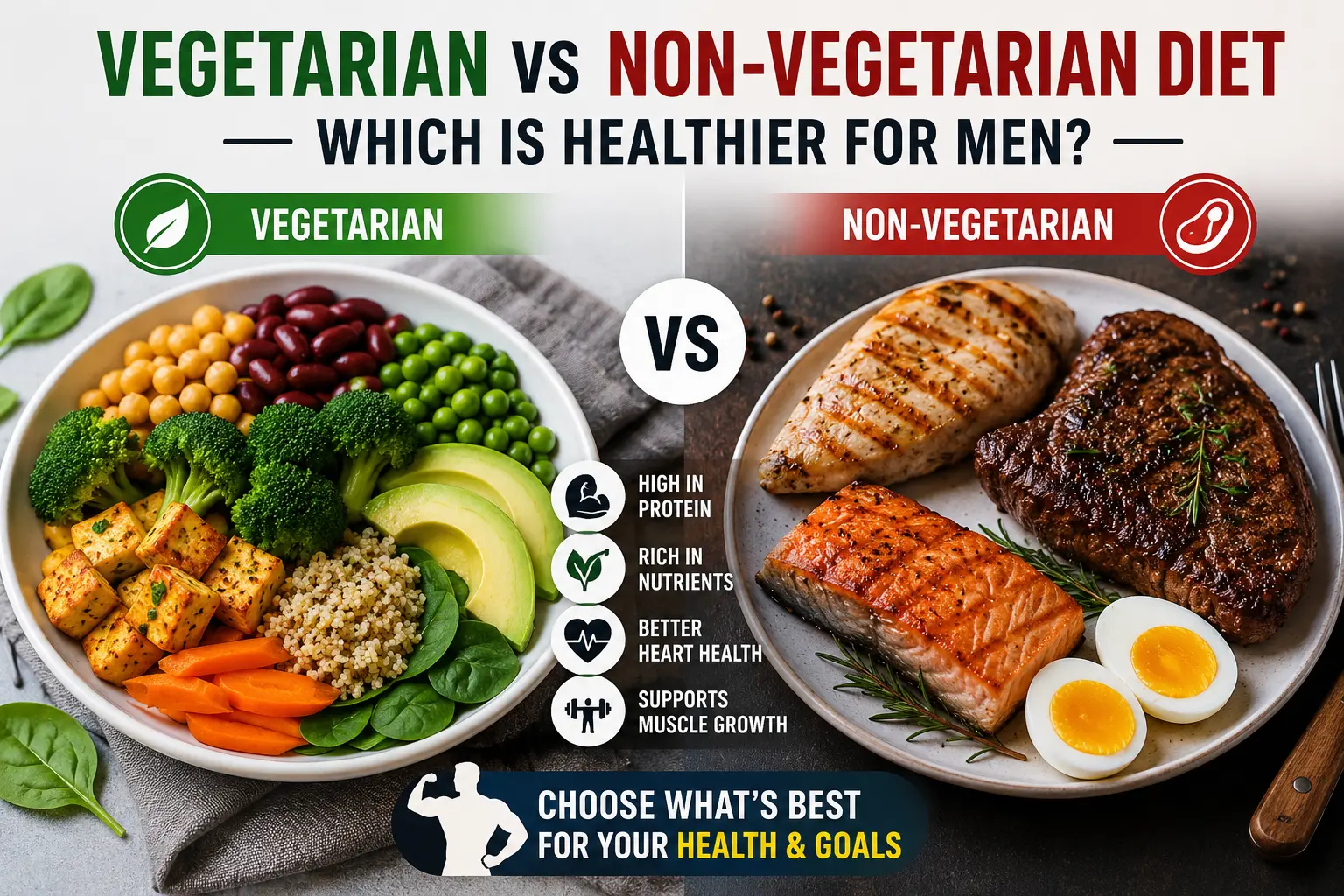
The vegetarian vs non-vegetarian diet debate rarely gets settled with actual data — it usually turns into personal opinion, gym-bro folklore, or whatever your uncle read on WhatsApp. So instead of opinions, this article sticks to peer-reviewed research: comparative studies, systematic reviews, and meta-analyses that specifically looked at health outcomes in men. The honest answer isn’t “one diet wins.” It’s more nuanced than that, and understanding the actual trade-offs will serve you better than picking a side.
The Quick Verdict
If you only read one paragraph: research generally shows vegetarian diets are associated with better cardiometabolic markers — lower BMI, lower LDL and total cholesterol in most (not all) studies, lower blood glucose, and reduced cardiovascular disease risk. Non-vegetarian diets make it considerably easier to hit protein and B12 targets without planning. Neither diet is automatically “healthier” — the deciding factor in most research is diet quality, not just whether meat is included.
What the Research Actually Shows on Heart Health
Multiple large-scale reviews point in a similar direction here. A meta-analysis covering 86 cross-sectional and 10 cohort studies found vegetarians and vegans had significantly lower BMI, total cholesterol, LDL cholesterol, and blood glucose levels compared to omnivores, along with a reduced risk of ischemic heart disease incidence and mortality.
On the non-vegetarian side, an Oxford University study — the largest systematic review of its kind, covering over 1.4 million people across 13 cohort studies — found that red and processed meat consumption was linked to an increased risk of heart disease, likely driven by the saturated fat in red meat and the sodium in processed meat, both of which raise LDL cholesterol and blood pressure.
An important caveat, in the interest of fairness: not all research agrees on the size of this effect. A 2019 review published in the Annals of Internal Medicine concluded that the association between red and processed meat and cardiometabolic outcomes was real, but “very small,” with the researchers rating the certainty of evidence as low. So while the general direction of the evidence favors lower meat intake for heart health, the magnitude of individual risk is still genuinely debated among researchers.
Cancer Risk: What’s Actually Established
This is one area where the evidence is fairly firm, at least for processed meat specifically. The World Health Organization’s International Agency for Research on Cancer (IARC) classifies processed meat (bacon, sausages, deli meats) as a Group 1 carcinogen, and estimates that every 50 grams of processed meat eaten daily increases colorectal cancer risk by roughly 18%.
One nuance worth understanding: IARC’s “Group 1” classification reflects the strength of evidence that something causes cancer, not how much risk it carries. Processed meat is grouped alongside tobacco and asbestos on that basis, but that doesn’t mean eating a sandwich carries the same risk as smoking — it means scientists are similarly confident that both cause cancer, at very different scales of risk.
Red meat’s cancer link is somewhat less certain than processed meat’s, though multiple meta-analyses have found associations with colorectal and gastric cancer risk, particularly at higher intake levels. Based on this evidence, the World Cancer Research Fund recommends limiting red meat to no more than three portions per week.
Weight, BMI, and Body Composition
A comparative study specifically on men aged 16-25 found that after three months, the group following a vegetarian diet showed a statistically significant reduction in BMI, along with improvements in sleep quality and mindfulness scores, compared to the non-vegetarian group.
This tracks with broader findings: multiple studies show vegetarians tend to have lower BMI and smaller waist circumference than non-vegetarians. A separate quality-of-life study similarly found vegetarians had a better anthropometric profile (BMI and waist circumference) and lower blood glucose — though, interestingly, they also showed higher LDL cholesterol in that specific study, a reminder that individual studies don’t always agree perfectly with the broader trend, and diet quality within each group matters enormously.
The Muscle-Building Question
This is the concern that stops most men from even considering a vegetarian diet, so let’s address it directly using actual intake data. A Flemish matched-samples study comparing vegetarian and non-vegetarian men found that vegetarian men consumed meaningfully less protein as a percentage of total energy (12.7% vs. 15.3%), while total calorie intake between the two groups wasn’t significantly different.
That gap is real, but it’s a planning problem, not a biological ceiling. Combining varied plant proteins — legumes, tofu, tempeh, dairy (for lacto-vegetarians), and whole grains — across the day can close this gap without much difficulty. The research doesn’t show vegetarian men are incapable of building muscle; it shows the average vegetarian man in these studies wasn’t deliberately optimizing protein intake, which is a fixable habit, not a fixed limitation.
Where Vegetarian Diets Fall Short: Real Deficiency Risks
To be fair to the other side of this comparison, vegetarian diets do carry genuine, well-documented nutritional risks if they’re not planned properly:
- Vitamin B12 — found almost exclusively in animal products; strict vegetarians and vegans often need a fortified source or supplement
- Iron — plant-based (non-heme) iron is absorbed less efficiently than the iron in meat
- Zinc — also less bioavailable from plant sources compared to animal sources
- Omega-3 fatty acids — plant sources (flax, walnuts, chia) provide a different form than the omega-3s found in fatty fish, and research suggests it may offer somewhat different cardiovascular benefits
None of these are reasons to avoid a vegetarian diet — they’re simply nutrients that require more conscious attention, the same way a non-vegetarian diet requires conscious attention to fiber and saturated fat intake.
A Genuinely Surprising Finding: Varicose Veins
Not every piece of research favors vegetarian diets, and it’s worth including the outliers for a fair comparison. A large Taiwan Biobank study of nearly 10,000 adults found that vegetarian men specifically had a higher risk of varicose veins compared to non-vegetarian men (odds ratio of 1.45) — an association that wasn’t observed in women in the same way. The exact mechanism isn’t fully understood, but it’s a good reminder that “vegetarian” doesn’t mean “risk-free” across every single health outcome.
Mental Health: A Genuinely Mixed Picture
A systematic review of 22 studies on vegetarian diets found consistent physical health benefits (lower rates of coronary heart disease and obesity, better cardiovascular and metabolic markers), but the picture for mental health was far less clear-cut. Some studies found no significant mental health effects from vegetarian diets, while others pointed to potential risks for increased anxiety and disordered eating patterns in certain groups. This doesn’t mean vegetarian diets cause mental health issues — it likely reflects that restrictive eating patterns of any kind carry some psychological risk if not approached thoughtfully.
Head-to-Head Summary
| Factor | Vegetarian Diet | Non-Vegetarian Diet |
|---|---|---|
| Heart disease risk | Generally lower, per most large reviews | Higher with regular red/processed meat intake |
| BMI & body weight | Tends to be lower | Tends to be higher, more variable |
| Cancer risk (colorectal) | Lower | Higher, especially with processed meat |
| Protein/muscle building | Requires more planning | Easier by default |
| B12 & iron intake | Requires attention/supplementation | Naturally sufficient |
| Blood glucose & LDL | Generally better (mixed on LDL) | Generally higher |
| Varicose vein risk (men) | Slightly higher, per one large study | Lower, per same study |
So, Which Should You Choose?
Based on the actual evidence, the honest answer is: diet quality matters more than the vegetarian/non-vegetarian label itself. A vegetarian diet built around fried snacks and refined carbs isn’t automatically healthier than a non-vegetarian diet built around lean protein, vegetables, and whole grains. Conversely, a vegetarian diet built around legumes, whole grains, nuts, and vegetables shows consistently strong outcomes across nearly every major study referenced here.
If you’re a man considering a vegetarian diet, the research suggests it’s a genuinely solid choice for heart health, weight management, and cancer risk reduction — as long as you deliberately plan around protein, B12, iron, and zinc. If you’re staying non-vegetarian, the clearest, most consistent piece of advice across every source is to keep processed meat intake low and moderate red meat intake, rather than eliminating meat entirely.
Frequently Asked Questions
Q: Is a vegetarian diet actually better for men’s heart health?
A: Most large-scale research shows vegetarians have lower cholesterol, lower blood pressure risk factors, and reduced heart disease incidence compared to regular meat-eaters, though the size of this benefit is debated in some reviews.
Q: Can men build muscle on a vegetarian diet?
A: Yes. Research shows vegetarian men often consume less protein than non-vegetarian men on average, but this reflects a lack of planning, not a biological limit. Combining plant protein sources across the day can meet muscle-building protein needs.
Q: Does eating meat cause cancer?
A: Processed meat has strong, established links to colorectal cancer risk (about 18% higher risk per 50g eaten daily). Red meat’s cancer link is less certain but still associated with increased risk at higher intake levels, according to multiple reviews.
Q: What nutrients should vegetarian men worry about most?
A: Vitamin B12, iron, zinc, and omega-3 fatty acids are the nutrients most likely to fall short on a vegetarian diet and deserve deliberate attention or supplementation.
Q: Is there any downside to vegetarian diets for men specifically?
A: One large study found vegetarian men had a higher risk of varicose veins compared to non-vegetarian men, though this is a narrower finding compared to the broader cardiometabolic benefits generally associated with vegetarian diets.
Related Reads
- Vege Health Foods: Healthy Plant-Based Eating for Better Health
- How Much Protein Do Men Need Daily: A Complete Guide
- Weight Loss for Men Over 40: Proven Strategies That Work
Conclusion
The vegetarian vs non-vegetarian debate isn’t really a competition with one winner — it’s a trade-off between different sets of planning requirements. Vegetarian diets show consistently strong results for heart health, weight management, and cancer risk across the research, but require deliberate attention to protein, B12, iron, and zinc. Non-vegetarian diets make hitting protein targets easier, but carry real, well-documented risks tied specifically to processed and excessive red meat intake. Whichever path you choose, the research is remarkably consistent on one point: the quality of what’s on your plate matters more than the label you put on your diet.
This article is based on peer-reviewed research published in journals including the European Heart Journal, Nutrition, Metabolism and Cardiovascular Diseases, and data from the WHO’s International Agency for Research on Cancer. It is intended for general education and is not a substitute for professional medical or dietary advice.