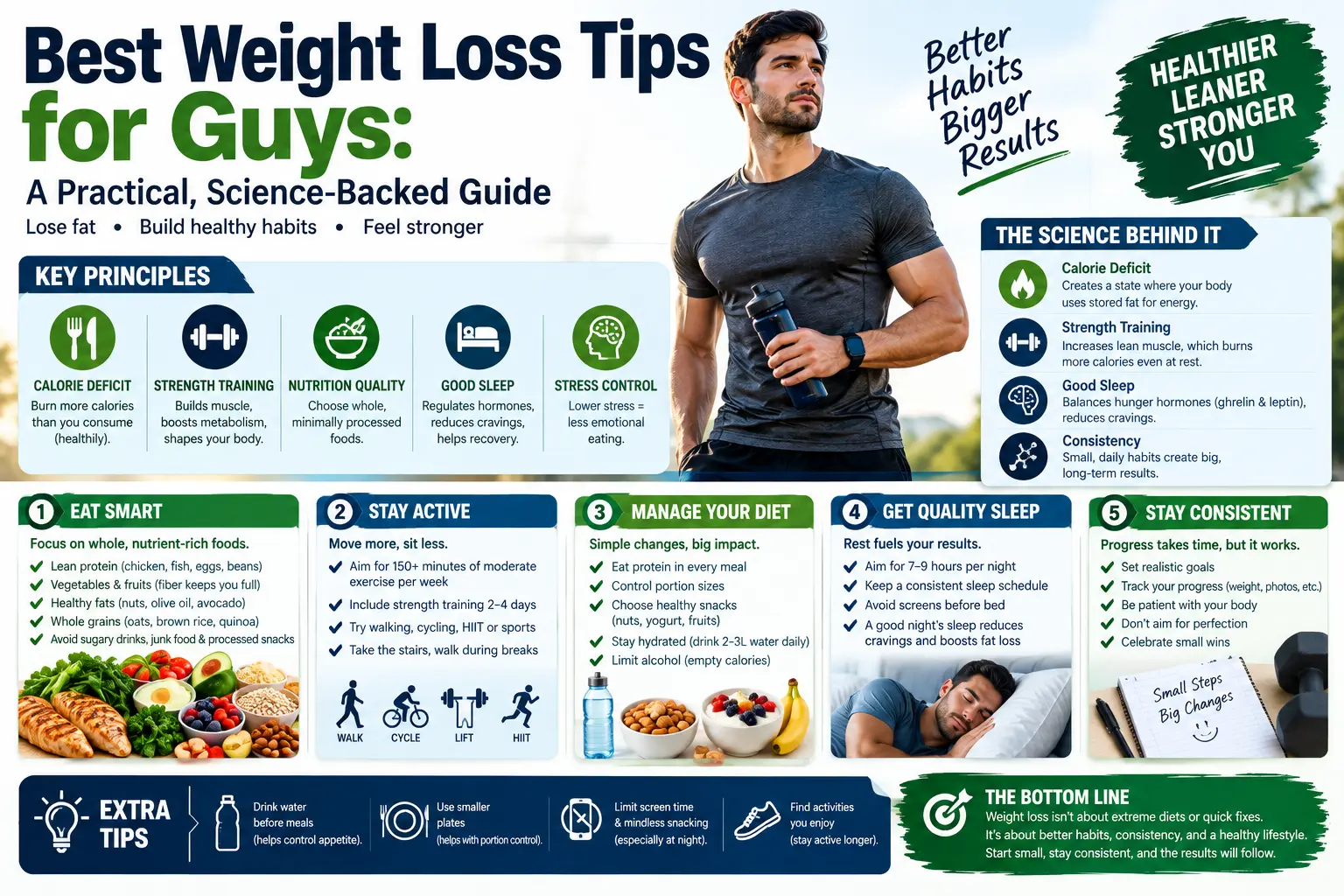
Most weight loss advice online is either wildly generic (“eat less, move more”) or oversold with miracle claims that don’t survive contact with real life. If you’re a guy actually trying to lose weight — not just read about it — you need practical weight loss tips for guys that are explained clearly enough to start today, not a repackaged list of things you already know.
This guide skips the fluff and focuses on the handful of levers that account for most of the results: calorie balance, protein, strength training, sleep, and the habits that quietly sabotage progress even when the diet itself looks fine on paper.
The One Rule That Actually Matters: Calorie Balance
Every weight loss method that works, works because it puts you in a calorie deficit — eating less energy than your body burns in a day. Low-carb, intermittent fasting, keto, calorie counting apps: none of these have a magic mechanism beyond helping you eat less overall, whether directly or by controlling hunger and cravings.
This matters because it simplifies the decision. Pick whichever approach makes a calorie deficit easiest for you to sustain — that’s the one that will actually work. A moderate deficit of roughly 500 calories a day tends to produce steady, sustainable loss of about half a kilogram a week without the extreme hunger and muscle loss that come with more aggressive cuts.
Prioritize Protein Over Everything Else in Your Diet
If you only change one thing about what you eat, make it protein intake. Higher protein diets consistently outperform lower-protein diets for fat loss, for a few concrete reasons: protein keeps you fuller for longer, it has a higher “thermic effect” (your body burns more calories digesting it), and it protects muscle mass while you’re in a calorie deficit — which matters, because losing muscle along with fat slows your metabolism and makes the weight easier to regain.
A practical target for most men actively losing weight is roughly 1.6 to 2.2 grams of protein per kilogram of body weight per day, spread across meals rather than loaded into one sitting. Good sources include eggs, chicken, fish, paneer, dal, Greek yogurt, and whey protein if you need a convenient top-up. Our guide on Protein Intake After 30: Kitna Zaroori Hai Roz? breaks this down in more detail, including how the target shifts as you age. If you’d rather explore protein and meal-replacement options directly, our breakdown of Herbalife Formula 1 Shake ingredients and nutrition facts covers one popular product’s actual composition, unfiltered by marketing claims.
Strength Training Beats Cardio for Long-Term Results
Cardio burns calories while you’re doing it. Strength training does something cardio can’t: it signals your body to hold onto — or build — muscle while you’re losing fat, which keeps your metabolism higher and gives you a leaner, more defined result at the same body weight.
You don’t need a complicated program. Two to four sessions a week covering the major movement patterns — squat, hinge, push, pull, carry — is enough to see real results over a few months. If a gym isn’t accessible, bodyweight training and resistance bands can produce similar results, especially for beginners. Cardio still has a place, mainly for cardiovascular health and burning extra calories on top of your deficit, but it shouldn’t be the centerpiece of a weight loss plan.
Sleep Is Doing More Than You Think
Poor sleep doesn’t just leave you tired — it directly undermines weight loss. A widely cited study published in the Annals of Internal Medicine found that sleep-restricted dieters lost a larger share of weight from muscle instead of fat, and reported feeling hungrier the next day — making a calorie deficit feel much harder to stick to than it should.
Aim for 7 to 9 hours a night as a baseline, not an afterthought. If fatigue has been a bigger issue for you than just diet discipline, it’s worth ruling out other causes first — our guide on Why Do Men Feel Tired All the Time? 10 Common Causes covers this in depth, since chasing weight loss while running on chronic sleep debt or an undiagnosed issue tends to backfire.
Alcohol Is a Bigger Factor Than Most Men Admit
Alcohol is calorie-dense (about 7 calories per gram, close to fat), offers no nutritional value, and tends to lower inhibitions around food choices later in the evening. A couple of beers or pegs a few nights a week can quietly account for a meaningful chunk of weekly calorie intake without ever showing up as “food” in your head. You don’t have to eliminate it, but tracking it honestly for a week or two is often eye-opening.
Don’t Ignore the Basics of Fitness Beyond the Scale
Weight loss and general fitness aren’t quite the same goal, and treating them as identical often leads to burnout. Building sustainable habits — consistent training, reasonable nutrition, adequate recovery — matters more long-term than any single dramatic change. Our roundup of Top Fitness Tips Shared by Men With Health Experts covers broader habits worth building alongside a weight loss plan, not just the scale-focused ones.
A Simple Weekly Structure for These Weight Loss Tips
Rather than overhauling everything at once, most men find more success layering changes in gradually:
- Week 1–2: Set a calorie target (a moderate deficit, not an extreme one) and start tracking food, even loosely
- Week 2–4: Add 2–3 strength training sessions a week, focused on the major compound movements
- Ongoing: Prioritize protein at every meal, protect your sleep window, and keep alcohol intake in check
- Every 2–4 weeks: Reassess — if weight loss stalls for more than two to three weeks with no change, revisit your calorie target rather than assuming something is fundamentally broken
What Doesn’t Work (or Isn’t Worth the Hype)
- Fad diets promising rapid loss — most of the early “success” is water weight, and the restrictive nature makes them hard to sustain
- Spot reduction — you cannot choose where fat comes off through targeted exercises; overall body fat percentage drives this, not crunches or specific machines
- Detox teas and fat-burner supplements — the vast majority have little to no independent clinical evidence behind their weight loss claims, and some carry real side-effect risks
When to Involve a Doctor
If weight loss efforts consistently fail despite genuine, consistent effort, or if you’re dealing with symptoms like persistent fatigue, unexplained weight changes, or other concerning symptoms alongside your weight, it’s worth ruling out underlying causes — thyroid issues, sleep apnea, and hormonal factors can all make weight loss significantly harder and deserve a doctor’s input rather than more willpower, and no list of weight loss tips for guys can substitute for that. Our guide on Testosterone Decline After 30: Myths vs Reality is worth reading if hormonal changes are part of what you suspect is going on.
Frequently Asked Questions About Weight Loss Tips for Guys
What’s the fastest safe way for a man to lose weight?
A moderate calorie deficit of around 500 calories a day, combined with adequate protein and regular strength training, produces steady, sustainable loss of roughly half a kilogram a week without the muscle loss and rebound risk that come with crash diets — among the safest weight loss tips for guys looking for lasting results rather than a quick fix.
Do men lose weight faster than women?
Men often see faster initial weight loss due to generally higher muscle mass and higher baseline calorie needs, but the fundamentals — calorie deficit, protein, training, sleep — apply the same way regardless of gender.
How much protein does a man need to lose weight?
Roughly 1.6 to 2.2 grams per kilogram of body weight per day is a reasonable target for most men actively losing weight while trying to preserve muscle mass.
This article is for general informational purposes and isn’t medical advice. If you have an existing health condition or are making major changes to your diet or exercise routine, consult a doctor before starting.