Many people focus on losing weight, but for some individuals, gaining weight can be just as challenging. If you’re naturally skinny, have a fast metabolism, or struggle to eat enough calories, you may find it difficult to increase your body weight. However, healthy weight gain is not about eating junk food, sugary snacks, or fast food all day. The right approach focuses on increasing muscle mass, improving strength, and providing your body with the nutrients it needs.
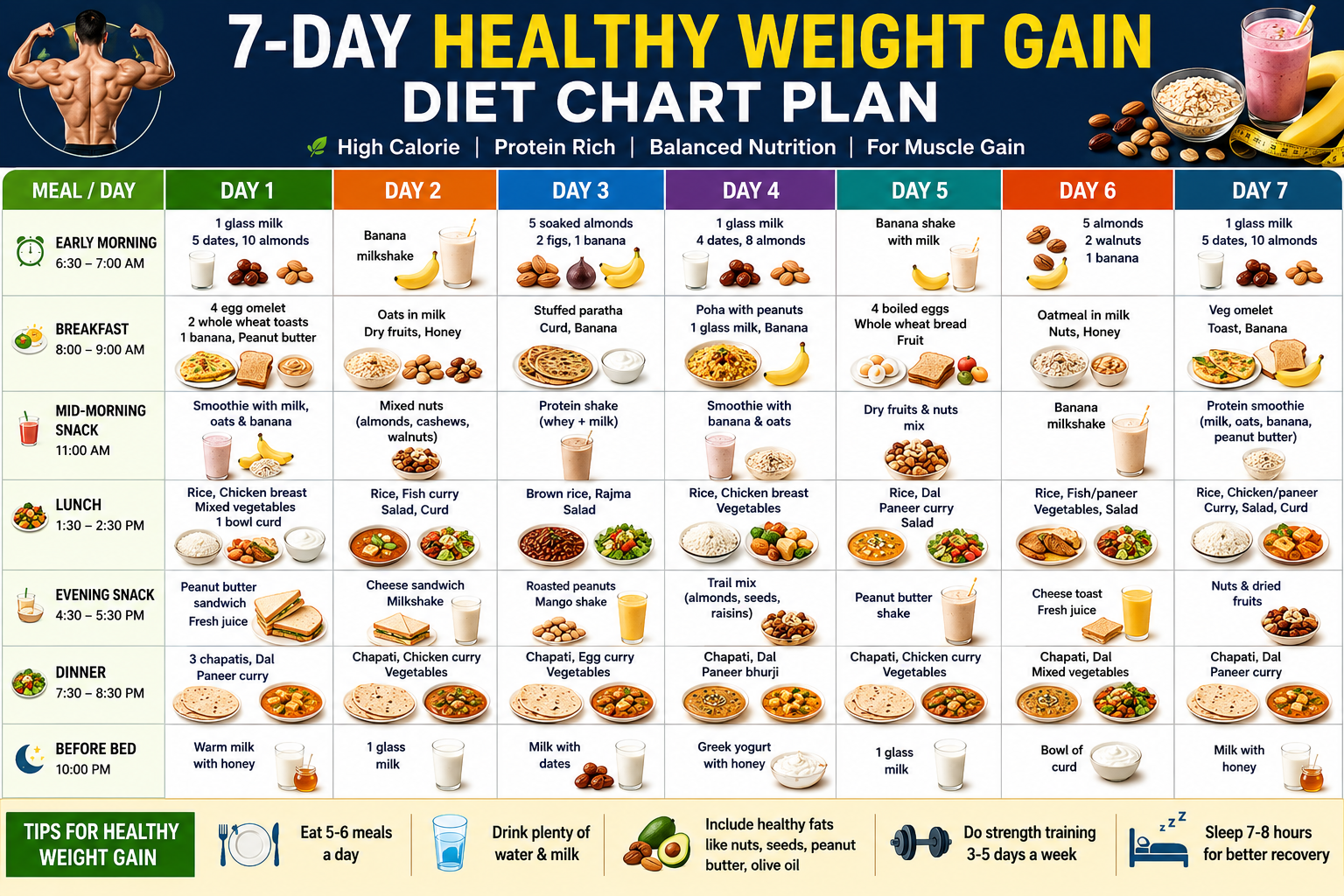
This detailed 7-day healthy weight gain diet chart is designed to help you gain weight naturally by consuming nutrient-dense foods rich in protein, healthy fats, and complex carbohydrates. When combined with resistance training, proper sleep, and consistency, this plan can help support gradual and sustainable weight gain.
Understanding Healthy Weight Gain
Healthy weight gain means increasing lean body mass rather than simply accumulating body fat. The process requires a calorie surplus, which means consuming more calories than your body burns daily.
A healthy weight gain program should focus on:
- Increasing muscle mass
- Improving strength and endurance
- Supporting hormone production
- Enhancing energy levels
- Strengthening immunity
- Improving overall health
Common Reasons for Being Underweight
Some people remain underweight despite eating regularly due to several factors:
- Fast metabolism
- Genetics
- Poor appetite
- High physical activity
- Digestive disorders
- Stress and anxiety
- Irregular meal timings
- Medical conditions affecting nutrient absorption
Before starting any weight gain program, individuals with medical concerns should consult a healthcare professional.
How Many Calories Do You Need to Gain Weight?
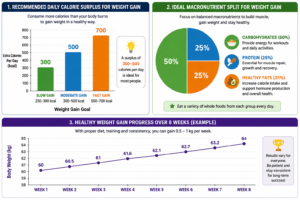
To gain weight, you must eat more calories than your body uses.
General Guidelines
| Goal | Daily Calorie Surplus |
|---|---|
| Slow Weight Gain | 250–300 calories |
| Moderate Weight Gain | 300–500 calories |
| Fast Weight Gain | 500–700 calories |
A surplus of 300–500 calories daily is generally considered ideal for healthy and sustainable weight gain.
Macronutrients for Weight Gain
Protein
Protein is the most important nutrient for muscle growth.
Recommended Intake
- 1.6–2.2 grams per kilogram of body weight
For example:
- 60 kg person = 96–132 grams protein daily
- 70 kg person = 112–154 grams protein daily
Best Protein Sources
- Eggs
- Chicken breast
- Fish
- Paneer
- Tofu
- Soy chunks
- Greek yogurt
- Milk
- Lentils
- Whey protein
Carbohydrates
Carbohydrates provide energy and help replenish glycogen stores.
Healthy Carb Sources
- Rice
- Oats
- Potatoes
- Sweet potatoes
- Whole wheat bread
- Whole wheat chapati
- Brown rice
- Fruits
Healthy Fats
Healthy fats contain more calories per gram and help increase overall calorie intake.
Healthy Fat Sources
- Peanut butter
- Almonds
- Cashews
- Walnuts
- Chia seeds
- Flaxseeds
- Olive oil
- Avocados
7-Day Healthy Weight Gain Diet Chart
Day 1
Early Morning (6:30–7:00 AM)
- 1 glass full-fat milk
- 5 dates
- 10 almonds
- 2 walnuts
Calories: Approximately 300
Breakfast (8:00 AM)
- 4-egg omelet
- 3 whole wheat toasts
- 1 banana
- 2 tablespoons peanut butter
Calories: Approximately 700
Mid-Morning Snack (11:00 AM)
- Banana-oats smoothie
- 250 ml milk
- 1 banana
- 50g oats
- Honey
Calories: Approximately 450
Lunch (1:30 PM)
- 2 cups rice
- 200g chicken breast or paneer
- Mixed vegetables
- 1 bowl curd
Calories: Approximately 850
Evening Snack (4:30 PM)
- Peanut butter sandwich
- Fresh fruit juice
Calories: Approximately 400
Dinner (8:00 PM)
- 3 chapatis
- Dal
- Paneer curry
Calories: Approximately 700
Before Bed
- 1 glass warm milk
Calories: Approximately 150
Total Calories
Approximately 3,500 calories
Day 2
Breakfast
- Oats cooked in milk
- Honey
- Mixed nuts
- Banana
Snack
- Dry fruit mix
Lunch
- Rice
- Fish curry or soy chunks
- Salad
- Yogurt
Evening
- Cheese sandwich
- Milkshake
Dinner
- Chapati
- Chicken curry or paneer
- Vegetables
Bedtime
- Full-fat milk
Daily Calories: 3,200–3,500
Day 3
Breakfast
- Stuffed potato paratha
- Curd
- Banana shake
Snack
- Protein smoothie
Lunch
- Brown rice
- Rajma
- Paneer salad
Evening
- Roasted peanuts
- Mango shake
Dinner
- Chapati
- Egg curry
- Vegetables
Bedtime
- Milk and dates
Daily Calories: 3,300+
Day 4
Breakfast
- Poha with peanuts
- Full-fat milk
- Banana
Snack
- Oats smoothie
Lunch
- Rice
- Chicken breast or tofu
- Mixed vegetables
Evening
- Trail mix
- Fruit juice
Dinner
- Chapati
- Paneer bhurji
- Dal
Bedtime
- Greek yogurt
Daily Calories: 3,200+
Day 5
Breakfast
- 4 boiled eggs
- Whole wheat bread
- Peanut butter
- Fruit
Snack
- Mixed nuts
Lunch
- Rice
- Dal
- Paneer curry
Evening
- Weight gain shake
Dinner
- Chapati
- Chicken curry
- Vegetables
Bedtime
- Milk
Daily Calories: 3,400+
Day 6
Breakfast
- Oatmeal
- Honey
- Nuts
- Milk
Snack
- Banana shake
Lunch
- Rice
- Fish or paneer
- Salad
Evening
- Cheese toast
Dinner
- Dal
- Chapati
- Vegetable curry
Bedtime
- Yogurt
Daily Calories: 3,200+
Day 7
Breakfast
- Vegetable omelet
- Toast
- Banana
- Milk
Snack
- Protein smoothie
Lunch
- Rice
- Chicken or paneer
- Yogurt
Evening
- Dry fruits
- Peanut butter sandwich
Dinner
- Chapati
- Dal
- Paneer curry
Bedtime
- Milk with honey
Daily Calories: 3,300+
High-Calorie Homemade Weight Gain Shake
This shake can provide around 700–900 calories.
Ingredients
- 500 ml full-fat milk
- 2 bananas
- 3 tablespoons peanut butter
- 50g oats
- 1 tablespoon honey
- 10 almonds
Preparation
Blend all ingredients until smooth.
Consume between meals or after workouts.
Best Workout Plan for Weight Gain
Nutrition alone is not enough. Resistance training helps convert extra calories into muscle.
Monday
- Chest
- Triceps
Tuesday
- Back
- Biceps
Wednesday
- Legs
Thursday
- Rest
Friday
- Shoulders
Saturday
- Full Body
Sunday
- Rest
Focus on:
- Squats
- Deadlifts
- Bench Press
- Pull-Ups
- Overhead Press
These compound exercises stimulate maximum muscle growth.
Lifestyle Tips for Faster Weight Gain
Eat Every 3 Hours
Consume 5–6 meals daily.
Drink Calories
Milkshakes and smoothies help increase calorie intake without making you feel overly full.
Add Healthy Fats
Drizzle olive oil on meals and include nuts regularly.
Track Progress
Weigh yourself weekly rather than daily.
Sleep Well
Aim for 7–9 hours of quality sleep every night.
Stay Consistent
Healthy weight gain takes time. Most people gain weight gradually over several weeks and months.
Foods to Avoid During Weight Gain
Not all high-calorie foods are healthy.
Limit:
- Sugary sodas
- Excessive candy
- Deep-fried foods
- Packaged snacks
- Excess alcohol
- Processed meats
These foods may increase fat gain without supporting muscle growth.
Frequently Asked Questions
How much weight can I gain in one month?
Most people can gain 2–4 kg per month with a proper calorie surplus and strength-training program.
Which fruit is best for weight gain?
Bananas, mangoes, dates, raisins, and avocados are excellent choices.
Is peanut butter good for weight gain?
Yes. Peanut butter is calorie-dense and contains healthy fats, protein, and essential nutrients.
Should I do cardio while gaining weight?
Yes, but keep it moderate. Too much cardio can make it harder to maintain a calorie surplus.
Can skinny people gain muscle?
Absolutely. With sufficient calories, protein, strength training, and recovery, even naturally skinny individuals can build muscle and gain weight.
Related Post
Vegetarian Health Food: Best Plant-Based Foods for Men’s Health
Weight Loss for Men Over 40: Proven Strategies That Work
Vege Health Foods: Healthy Plant-Based Eating for Better Health
Final Thoughts
A successful weight gain journey is built on consistency, calorie surplus, high-quality nutrition, resistance training, and proper recovery. This 7-Day Healthy Weight Gain Diet Chart provides a structured plan that can help underweight individuals gain weight naturally while supporting muscle growth and overall health. Instead of relying on junk food, focus on nutrient-rich meals, adequate protein intake, and regular exercise to achieve long-lasting results. A steady gain of 0.5–1 kg per week is realistic, healthy, and easier to maintain over the long term.