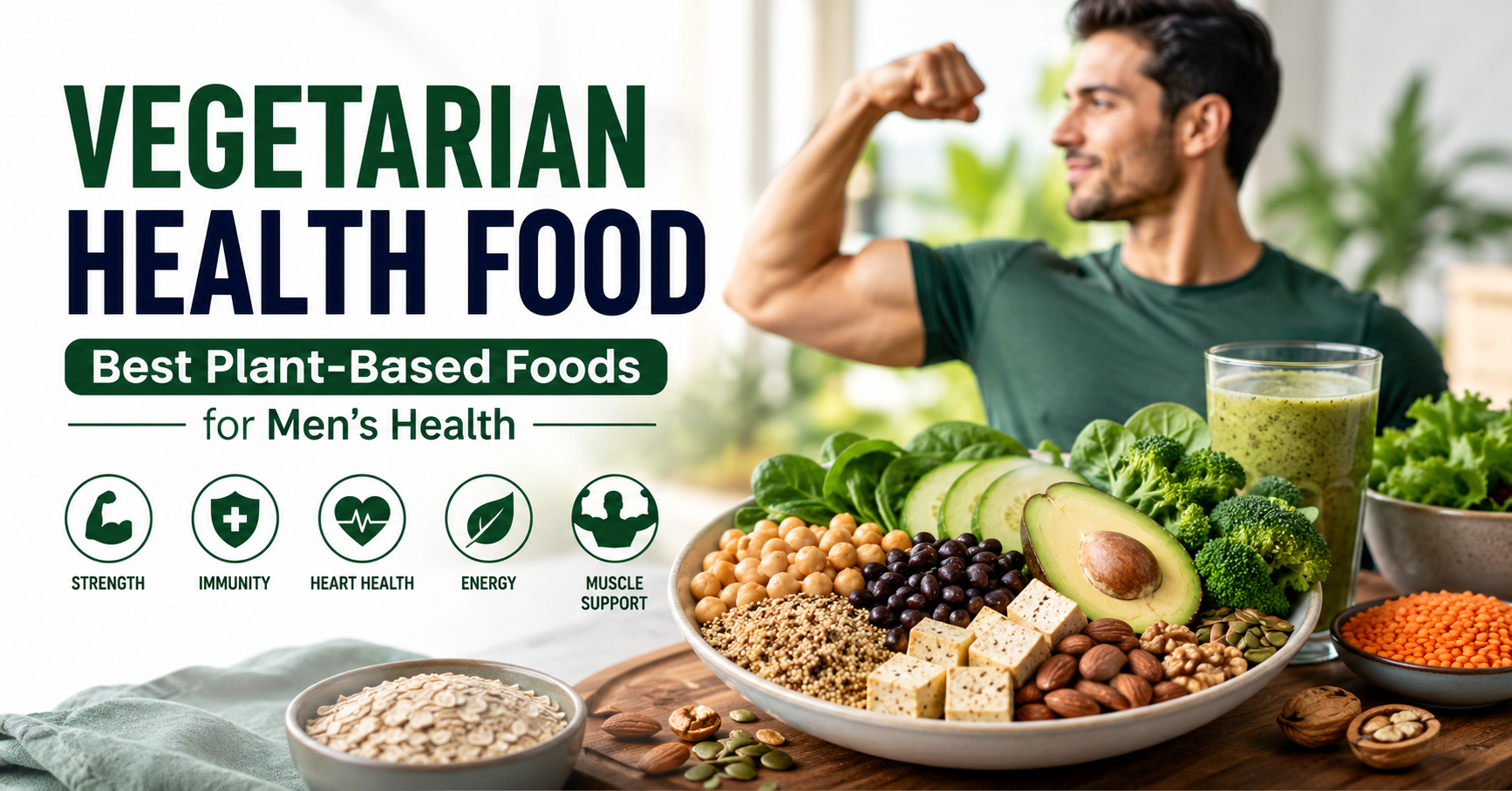
A common myth still holds men back from going vegetarian: the idea that you can’t build muscle, stay lean, or get enough protein without meat. The research doesn’t actually support that. A well-planned vegetarian diet can meet every nutritional need men have — the key word being “well-planned.” This guide breaks down the best vegetarian health foods, what nutrients men specifically need to watch, and how to build a plate that actually works for an active lifestyle.
Why Vegetarian Health Food Matters for Men
Research consistently shows that vegetarians tend to have lower cholesterol, lower blood pressure, lower rates of type 2 diabetes, healthier body weight, and lower overall cancer rates compared to non-vegetarians. These benefits are largely linked to higher intake of fruits, vegetables, whole grains, nuts, and fiber, combined with lower intake of saturated fat.
That said, there’s an important caveat worth being upfront about: not every vegetarian health diet is automatically healthy. A diet built around processed vegetarian junk food — think fried snacks, refined carbs, and sugary drinks — can still fall short on real nutrition. The goal isn’t just “no meat.” It’s building meals around genuinely nutrient-dense plant foods.
Best Vegetarian Protein Sources for Men
This is usually the first concern men raise, so let’s address it directly. Plant-based protein sources include:
- Legumes – beans, lentils, chickpeas, and peas are rich in protein and fiber
- Soy products – tofu, tempeh, and edamame are complete proteins, meaning they contain all essential amino acids
- Nuts and seeds – almonds, peanuts, chia seeds, and pumpkin seeds add protein alongside healthy fats
- Whole grains – quinoa and millet are notably higher in protein than most other grains
- Dairy and eggs (for lacto-ovo vegetarians) – milk, yogurt, cheese, and eggs remain excellent complete protein sources if your version of vegetarian includes them
Practical tip: Combining different plant proteins across the day (like rice with lentils, or whole-grain bread with hummus) is a simple, traditional way to make sure you’re covering all essential amino acids without overthinking it.
Nutrients Men Need to Pay Extra Attention To
If you’re vegetarian, a few specific nutrients deserve more conscious attention, since they’re harder to get from plant sources alone:
Iron. Plant-based iron (non-heme iron) isn’t absorbed as efficiently as the iron found in meat. Pairing iron-rich foods (lentils, spinach, beans) with a source of vitamin C — like citrus fruit or bell peppers — significantly improves absorption.
Vitamin B12. This is found almost exclusively in animal products, including dairy and eggs. Strict vegetarians who avoid all animal products (vegans) are at particular risk of deficiency and often need a fortified food source or supplement — this is worth discussing with a doctor.
Zinc. Important for immune function and testosterone-related processes in men specifically. Found in legumes, nuts, seeds, and whole grains, though plant-based zinc is also less easily absorbed than the zinc found in meat.
Omega-3 fatty acids. Plant sources like walnuts, ground flaxseed, chia seeds, and soybeans provide a form of omega-3, though research suggests it may not offer quite the same cardiovascular benefits as the omega-3s found in oily fish. If heart health is a priority, this is worth factoring in.
Calcium. Beyond dairy, good vegetarian sources include calcium-set tofu, fortified plant milks, and leafy green vegetables like collard greens and bok choy.
Top Vegetarian Health Foods to Build Your Diet Around
Green peas. A genuinely underrated food — good plant protein, fiber that supports gut health, and plant compounds called saponins that may help protect against oxidative stress.
Sweet potatoes. Low on the glycemic index and high in fiber, making them a smart carbohydrate choice that helps regulate blood sugar rather than spiking it.
Lentils and beans. Cheap, versatile, and among the most protein- and fiber-dense plant foods available — a genuine staple for anyone serious about a vegetarian diet.
Tofu and tempeh. Complete proteins that adapt to almost any dish, and a practical way to hit daily protein targets without relying on supplements.
Leafy greens (spinach, bok choy, collard greens). Provide iron, calcium, and a wide range of micronutrients for very few calories.
Nuts and seeds. A convenient way to add protein, healthy fats, zinc, and (for flax and chia specifically) omega-3s to any meal.
Quinoa and millet. Whole grains that offer meaningfully more protein than rice or regular wheat, while still being naturally gluten-free.
Building a Balanced Vegetarian Plate
Health guidelines generally recommend structuring a vegetarian diet around these food groups:
| Food Group | Examples | Why It Matters |
|---|---|---|
| Fruits | Berries, citrus, apples | Fiber, vitamins, antioxidants |
| Vegetables | Broccoli, spinach, peppers | Vitamins, minerals, fiber, low calorie density |
| Whole grains | Quinoa, oats, brown rice | Sustained energy, fiber, some protein |
| Protein | Lentils, tofu, beans, nuts | Muscle maintenance, satiety |
| Dairy/fortified alternatives | Milk, yogurt, fortified plant milk | Calcium, vitamin D, B12 |
A simple, practical rule from public health guidelines: aim for at least 5 portions of fruit and vegetables a day, choose whole grains over refined ones, and keep sugar, salt, and saturated fat intake in check — the same basic principles that apply to any healthy diet, vegetarian or not.
Frequently Asked Questions
Q: Can men get enough protein on a vegetarian health diet?
A: Yes. Combining sources like legumes, tofu, dairy, nuts, and whole grains across the day can meet or exceed daily protein needs for most men, including those doing regular strength training.
Q: What nutrients should vegetarian men watch most closely?
A: Iron, vitamin B12, zinc, omega-3 fatty acids, and calcium are the nutrients most likely to fall short on a vegetarian diet and deserve conscious attention.
Q: Is a vegetarian diet actually healthier than a non-vegetarian diet?
A: Research links vegetarian diets to lower cholesterol, lower blood pressure, and lower rates of type 2 diabetes and certain cancers — but only when the diet is built around whole, nutrient-dense foods rather than processed vegetarian substitutes.
Q: Do vegetarians need supplements?
A: Not always, but vitamin B12 is a common exception, especially for vegans, since it’s found almost exclusively in animal products. It’s worth discussing with a doctor based on your specific diet.
Related Reads
- Vege Health Foods: Healthy Plant-Based Eating for Better Health
- Men With Health: Best Weight Loss Strategies That Work
- Men’s Mental Health Month: Why It Matters More Than Ever
- Top Fitness Tips Shared by Men With Health Experts
Conclusion
Going vegetarian doesn’t mean giving up muscle, energy, or good health — it means being a bit more intentional about where your nutrients come from. Build meals around legumes, whole grains, nuts, and a wide variety of vegetables, pay extra attention to iron, B12, zinc, and omega-3s, and a vegetarian health diet can genuinely support an active, healthy lifestyle just as well as any other well-planned way of eating.
This article is based on publicly available guidance from Mayo Clinic, the NHS, and USDA nutrition resources. It is intended for general education and is not a substitute for professional medical or dietary advice.