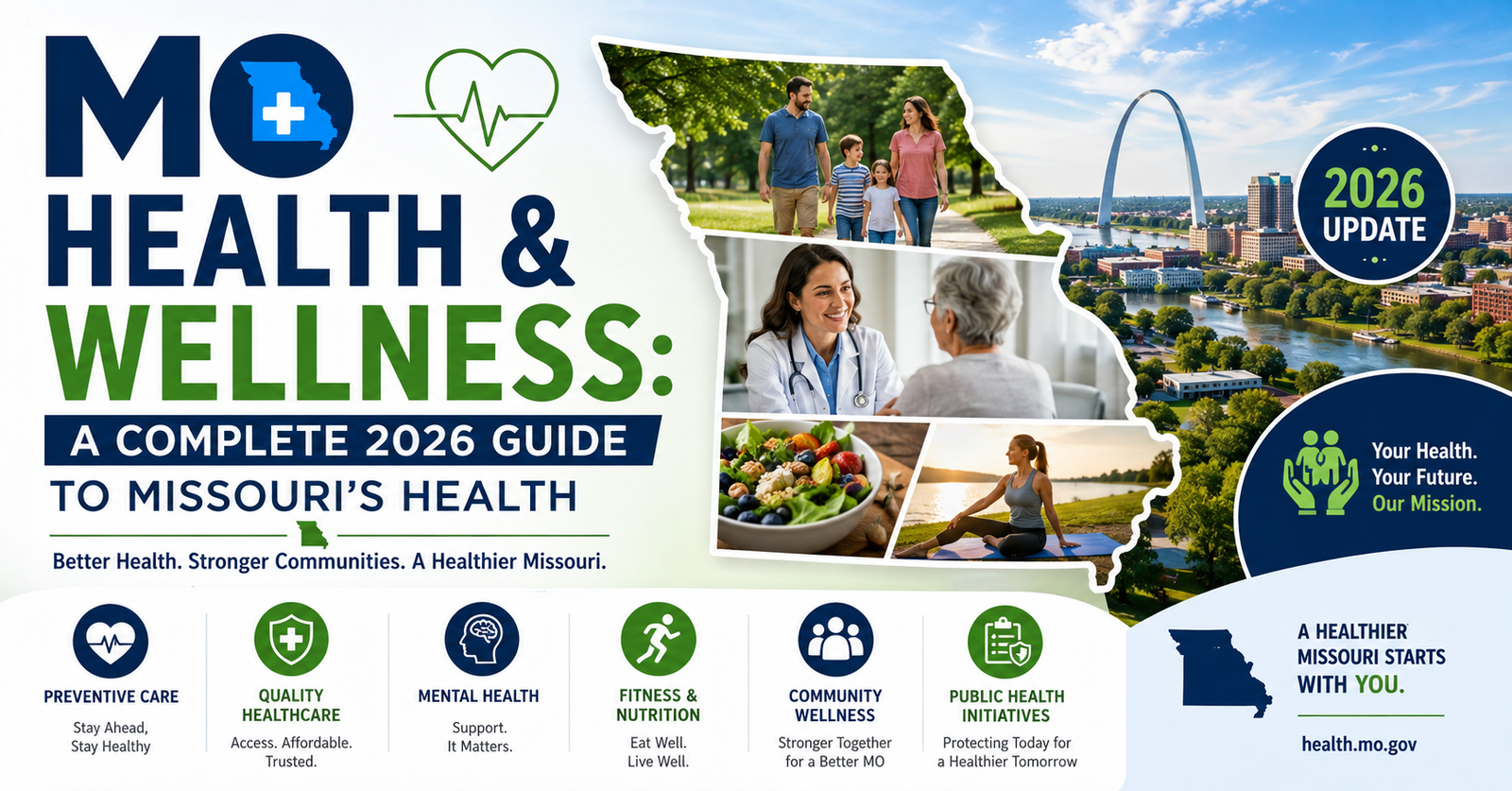
“MO Health and Wellness” covers a lot of ground — it’s not just about insurance coverage. It’s about where Missouri actually stands on health outcomes, what free and low-cost wellness programs exist across the state, and where residents can turn for support with everything from mental health to chronic disease prevention.
This guide pulls together Missouri’s current health rankings, the state’s major wellness initiatives, and practical resources available to residents in 2026 — whether you’re looking to improve your own health, support a family member, or simply understand how Missouri compares to the rest of the country.
Where Does Missouri Rank on Health in 2026?
Missouri’s overall health performance sits in the middle-to-lower tier nationally. According to America’s Health Rankings, Missouri placed 39th overall in its most recent annual report, while the Commonwealth Fund’s Scorecard on State Health System Performance ranked the state 43rd for how well its health care system serves residents.
These rankings draw on a broad model covering five categories: social and economic factors, physical environment, clinical care, health behaviors, and health outcomes — reflecting the idea that health isn’t just about doctor visits, but about the conditions people live, work, and grow up in. Missouri’s numbers reflect real, persistent challenges: nearly two out of every three adult Missourians are considered overweight or obese, and the state continues to grapple with heart disease, stroke, diabetes, and certain cancers as leading causes of disability and death.
Knowing where the state stands matters because it shapes where public health resources and attention are directed — and it helps residents understand that individual health challenges often connect to broader, statewide patterns.
Missouri’s Major Health and Wellness Programs
Missouri Department of Health and Senior Services (DHSS)
DHSS serves as the state’s central hub for public health information, prevention programs, and senior services. Its wellness and prevention work spans a wide range of areas, including chronic disease prevention, communicable disease control, immunizations, environmental health factors, and maternal and child health programs like Healthy Moms, Healthy Babies.
One practical resource worth knowing about: Missouri’s tobacco Quitline, reachable at 1-800-QUIT-NOW (1-800-784-8669), offers free support for residents looking to quit smoking — a genuinely accessible starting point for anyone working on this specific health goal.
Missouri Department of Mental Health (DMH) Wellness Initiatives
Mental health has become a much more visible part of Missouri’s wellness strategy in recent years. The Department of Mental Health runs several targeted programs:
- WORKplace WELLbeing — a program focused on building trauma-informed, mentally healthy workplace cultures across Missouri organizations.
- TeachWell — a wellness initiative specifically designed to support the mental health and emotional wellbeing of Missouri educators, recognizing the direct link between teacher wellbeing and classroom environment.
- DMH Content Hub — a library of free, self-paced educational courses covering mindfulness, stress management, trauma-informed care, and general mental health management, available to both professionals and individuals.
- Digital Detox Challenge — a periodic statewide initiative (held in August) encouraging Missourians to step back from constant connectivity in favor of balance and genuine connection.
These programs reflect a broader shift in how the state approaches wellness — treating mental health support as core public health infrastructure, not an afterthought.
Women, Infants, and Children (WIC) and Family Health Programs
The Missouri Department of Social Services coordinates several programs aimed specifically at family and children’s health, including the WIC program (Women, Infants, and Children) and SNAP food assistance, alongside MO HealthNet coverage itself. These programs work together to address food security and healthcare access as interconnected parts of family wellbeing, rather than treating them as separate issues.
If you’re looking for children’s health support specifically, Missouri’s Children’s Health page is a useful entry point for navigating what’s available.
Healthcare Professional Wellbeing Programs
Missouri has also built out dedicated wellness infrastructure for people working inside the healthcare system itself. MU Health Care’s wellness programs offer confidential, evidence-based support for healthcare professionals dealing with burnout, addiction, and other mental health concerns, working in coordination with the Missouri Board of Registration and Healing Arts, the Dental Board, and the Board of Pharmacy. A related program, MO PHP, extends similar unbiased professional support statewide to licensed healthcare workers.
This matters beyond just the professionals involved — a healthcare workforce that’s genuinely supported tends to provide better, more sustained care to the patients and communities it serves.
Healthcare Coverage: How MO HealthNet Fits In
No conversation about health and wellness in Missouri is complete without addressing healthcare coverage itself, since access to care is foundational to everything else on this list. Missouri’s Medicaid program, MO HealthNet, covers more than 1.3 million residents statewide, including roughly 500,000 children, and 2026 has brought significant changes to the program — including coverage cuts for certain services and upcoming eligibility changes tied to federal policy shifts.
Given how much detail this specific topic deserves, we’ve covered MO HealthNet’s eligibility rules, income limits, application process, and the recent 2026 coverage changes in a dedicated guide: MO HealthNet 2026: Eligibility, Income Limits, and the Coverage Changes Every Missouri Resident Needs to Know. If insurance coverage is your main concern, that guide goes much deeper into the specifics.
Practical Steps for Improving Your Health in Missouri
Beyond formal programs, a few practical, statewide-accessible starting points genuinely make a difference:
Get recommended health screenings. Regular screenings help catch conditions like heart disease, diabetes, and certain cancers early, when they’re generally far easier to treat. Missouri’s own public health messaging specifically emphasizes this as one of the highest-impact individual actions residents can take.
Stay current on immunizations. Missouri’s Department of Health and Senior Services maintains updated immunization guidance and data for both children and adults, along with resources addressing common vaccine misconceptions for anyone with questions.
Use local public health agencies. Missouri’s network of Local Public Health Agencies (LPHAs) exists specifically to address community-level health needs — from environmental health risks to emergency public health response — and can be a genuinely useful, often underused local resource.
Take advantage of free mental health education. The DMH Content Hub’s free courses on stress management and mental health are open to any Missouri resident, not just healthcare professionals, making them one of the more accessible wellness resources in the state.
Address weight and lifestyle factors gradually. Given that a majority of adult Missourians are classified as overweight or obese, and that this connects directly to the state’s leading causes of death, small, sustainable changes to diet and physical activity remain some of the most evidence-backed steps toward better long-term health outcomes.
Where to Find More Help
If you need to locate specific health services or clinics near you, the Missouri Department of Health and Senior Services offers a dedicated tool to help residents find health services and public health agencies based on their location — a practical starting point if you’re not sure where to begin.
For coverage-related questions specifically, MO HealthNet Constituent Services can be reached at 1-800-392-2161 (TTY 711).
Final Thoughts
“Health and wellness” in Missouri spans far more than any single program or ranking — it includes public health infrastructure, mental health support, family assistance programs, professional wellbeing initiatives, and the healthcare coverage that underpins access to all of it. While Missouri’s national health rankings show real room for improvement, the state has built out a genuinely broad set of programs and resources for residents willing to seek them out — many of them free, and most more accessible than people realize.
Whether your priority is understanding your healthcare coverage options, finding mental health support, or simply taking practical first steps toward better health, Missouri’s state agencies and public health infrastructure offer a reasonable starting point — and for coverage specifically, our detailed MO HealthNet guide linked above is the next place to look.
Frequently Asked Questions
How does Missouri rank nationally for health?
Missouri ranked 39th overall in America’s Health Rankings’ most recent annual report, and 43rd in the Commonwealth Fund’s Scorecard on State Health System Performance — placing the state in the lower-middle tier nationally on most health measures.
What free wellness programs does Missouri offer?
Missouri offers several free programs, including the DMH Content Hub’s mental health and stress management courses, the tobacco Quitline (1-800-QUIT-NOW), WIC for qualifying families, and various initiatives run through the Department of Health and Senior Services and Department of Mental Health.
Is MO HealthNet the same thing as MO Health and Wellness?
No. MO HealthNet is specifically Missouri’s Medicaid program, providing healthcare coverage to eligible residents. “Health and wellness” in Missouri is a much broader category that includes MO HealthNet alongside mental health programs, prevention initiatives, public health agencies, and general wellness resources.
Where can I find mental health support in Missouri?
The Missouri Department of Mental Health offers several starting points, including the DMH Content Hub’s free educational courses, WORKplace WELLbeing for organizations, and MO PHP for licensed healthcare professionals specifically dealing with burnout or mental health concerns.
What are Missouri’s biggest health challenges right now?
Weight and obesity affect roughly two out of three adult Missourians, contributing to the state’s leading causes of disability and death: heart disease, stroke, diabetes, and certain cancers. These challenges connect closely to the state’s lower-than-average national health rankings.
Note: Rankings, program details, and figures referenced in this article reflect publicly available information as of mid-2026. Missouri’s health programs and initiatives are updated regularly — check health.mo.gov and dmh.mo.gov for the most current details.