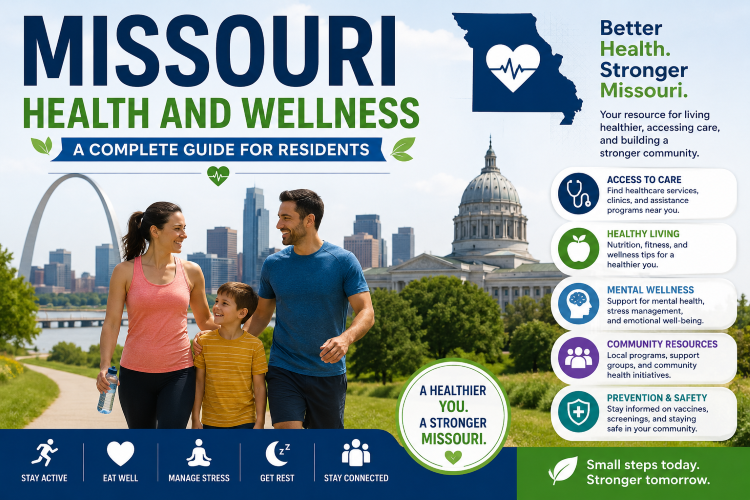
Missouri is a state of contrasts. It has big cities like St. Louis and Kansas City. It also has quiet farm towns and river valleys. This mix shapes how people think about health here. Urban residents often have quick access to hospitals and specialists. Rural residents sometimes travel an hour just to see a doctor. Because of this, health and wellness in Missouri looks different depending on where you live.
This guide walks through what Missouri health and wellness really means today. It covers state programs, mental health resources, insurance options, and simple lifestyle habits. Whether you live in Springfield, Columbia, or a small town near the Ozarks, this article gives you a clear picture of the tools available to you.
Why Health and Wellness Matters in Missouri
Missouri faces some unique health challenges. Chronic disease rates are higher than the national average in several counties. Access to specialists can be limited outside major metro areas. Mental health needs have grown, especially after the pandemic years. At the same time, the state has made real investments in wellness infrastructure.
Understanding these dynamics helps residents make better choices. It also helps families know where to turn when they need support. Health is not just about avoiding illness. It is about building habits, systems, and community ties that keep people strong over time.
Wellness, in this broader sense, touches many parts of life. It includes physical health, of course. But it also includes emotional balance, financial stability, social connection, and even the environment around you. Missouri’s public health agencies increasingly use this wider view. The Missouri Department of Mental Health, for example, organizes its wellness programs around eight different dimensions of wellbeing, not just the physical one. This approach includes environmental wellness, which means good health through pleasant and stimulating surroundings, emotional wellness, which means coping effectively with life and building satisfying relationships, financial wellness, and social wellness centered on connection and support systems.
That is a helpful frame for this whole guide. Health is not one thing. It is a web of habits and supports working together.
State-Level Health Resources in Missouri
The Missouri Department of Health and Senior Services (DHSS) is the main state agency overseeing public health. It runs programs covering immunizations, chronic disease prevention, senior services, and emergency public health response.
DHSS offers many free tools for residents. The department connects seniors, veterans, and individuals with disabilities to low-cost and free dental care services, and it also shares recommended immunization schedules along with vaccine safety information and statewide vaccination statistics. This matters because dental care and immunizations are often overlooked parts of overall wellness. Many people think of health only in terms of doctor visits. But oral health and up-to-date vaccines play a large role in preventing bigger problems later.
DHSS also provides free educational materials for communities. These include social media templates and posters designed to support health and wellness efforts locally, available both as printed copies and downloadable files. Local organizations, schools, and churches can use these resources to run their own wellness campaigns without starting from scratch.
If you are not sure where to start, the DHSS website acts as a hub. It helps residents find local health services and resources, including clinics and public health agencies near them, and it connects to local public health agencies that address a wide range of issues, from environmental health risks to emergency response during natural disasters.
MO HealthNet: Missouri’s Medicaid Program
For many Missourians, the biggest question about health is not “how do I stay well” but “how do I pay for care.” MO HealthNet is the state’s Medicaid program, and it plays a central role in answering that question.
If a resident does not have health insurance or needs help paying for care, they may be eligible for coverage through MO HealthNet. This program covers a wide range of services, from doctor visits to hospital stays, depending on eligibility category.
One notable part of MO HealthNet is the Program of All-Inclusive Care for the Elderly, known as PACE. PACE is jointly administered by MO HealthNet and Medicare, and it provides comprehensive health, social, recreational, and wellness services to participants, with one main goal being to help older adults live safely at home instead of moving into nursing facilities.
That goal matters a lot in a state with many rural, aging communities. Keeping seniors safely at home, rather than in institutional care, tends to improve quality of life. It also reduces strain on the broader healthcare system.
MO HealthNet also supports people who might otherwise fall through the cracks. The Ticket to Work program helps disabled individuals who earn too much to normally qualify for MO HealthNet still get assistance with healthcare costs, as long as they agree to participate in the program. This is a smart middle path for people trying to stay employed while managing a disability.
An Important Coverage Change to Know About
Residents relying on MO HealthNet for certain pain management services should take note of a coming change. Starting July 1, 2026, MO HealthNet will stop paying for acupuncture, chiropractic, and physical therapy services under its Complementary Health and Alternative to Chronic Pain Management program, and after June 30, 2026, it will no longer pay for these visits. Separately, but also effective July 1, 2026, MO HealthNet will stop paying for chiropractic services altogether, meaning visits to a licensed chiropractor will no longer be covered after that date.
This change applies to all MO HealthNet participants across the state. If you rely on these services for chronic pain management, it is worth planning ahead. Talk to your provider about alternative treatment options. Consider whether private insurance or out-of-pocket arrangements might bridge the gap. And if you have questions about how this affects your specific coverage, you can reach MO HealthNet Constituent Services at 800-392-2161 for guidance.
This is a good reminder that health policy shifts over time. Staying informed protects your wallet and your care plan.
Mental Health and Wellness Support Across the State
Mental health has become a bigger part of the wellness conversation in Missouri, as it has nationwide. The Missouri Department of Mental Health (DMH) has taken a broad, systemic approach to this issue.
DMH is committed to improving the mental wellbeing and overall wellness of all Missourians, and the department works to develop, promote, and implement wellness programming that helps both its own team members and the wider public be well and healthy where they live, work, learn, and play.
One flagship initiative is called WORKplace WELLbeing. This program promotes overall organizational wellbeing through a trauma-informed approach, aiming to build the kind of infrastructure that creates a safe culture in every corner of Missouri, so people can speak openly about mental health.
Workplaces are a natural place to focus this kind of effort. Adults spend a huge portion of their waking hours at work. If a workplace culture feels unsafe or dismissive of mental health struggles, employees suffer in silence. Programs like this aim to change that dynamic from the inside.
DMH also runs education-focused efforts. There is a program aimed specifically at teachers, since educators face their own distinct stressors. And DMH’s broader learning platform, the Content Hub, offers free courses to the public. These self-paced courses cover topics like mindfulness and stress management, trauma-informed care and peer support, and mental health management, and they are designed for both professionals and everyday individuals who want to build skills that make a difference in their own lives or the lives of others.
Wellness in Higher Education: A Missouri Case Study
Missouri’s universities offer an interesting window into how wellness programming can work at a smaller, more personal scale. Take Missouri State University’s Magers Health and Wellness Center as an example.
Magers Health and Wellness Center is committed to promoting the health and wellbeing of the university community, supporting the physical, mental, and emotional wellness of students, employees, retirees, and their dependents as a unique campus healthcare clinic.
The center also runs an employee wellness incentive program tied to health insurance premiums. By participating in wellness activities, health plan members can save up to $360 per year on their premiums for the 2026 plan year. That is a meaningful incentive, especially for larger families managing tight budgets.
This model shows a thoughtful balance. It rewards healthy behavior without punishing people who cannot participate in one specific activity. That kind of flexibility matters when designing wellness incentives, whether at a university, a small business, or a large employer.
Each medical school class also elects wellness representatives, who serve on a committee alongside the medical education office and a faculty liaison to organize wellness programs and activities. Having students help design their own wellness programming tends to produce better engagement. People are more likely to use resources they helped build.
Everyday Wellness Habits for Missouri Residents
Programs and policies matter. But daily habits matter just as much. Here are practical, low-cost ways Missouri residents can support their own wellness, regardless of where they live in the state.
1. Get Outside, Even in Winter
Missouri has real seasons. Hot, humid summers. Cold winters with ice storms. This makes outdoor activity harder to plan consistently. But fresh air and movement support both physical and mental health. Try short walks even on cold days. Local parks, like Forest Park in St. Louis or Shaw Nature Reserve near Gray Summit, offer free, accessible green space.
2. Use Free Educational Resources
As mentioned earlier, DMH’s Content Hub and DHSS’s educational library are both free. Take advantage of them. A single course on stress management or a downloadable guide on healthy habits can shift how you approach daily life.
3. Stay Current on Vaccinations
Vaccination schedules change. DHSS maintains updated immunization guidance for both children and adults. Missing a booster or a seasonal flu shot is an easy oversight. Set a yearly reminder to check your status with your doctor or local pharmacy.
4. Build a Support Network
Social wellness is not a luxury. It is a core pillar of overall health. Whether through a faith community, a hobby group, a gym, or a neighborhood association, having people to check in with reduces isolation. Isolation is a known risk factor for both physical and mental decline, especially for seniors in rural areas.
5. Understand Your Coverage
Insurance rules change, as shown by the MO HealthNet updates taking effect in mid-2026. Review your coverage at least once a year. Know what is covered, what is changing, and what alternatives exist if a service you rely on is no longer paid for.
6. Prioritize Sleep and Nutrition Basics
This sounds obvious, but it is often skipped. Consistent sleep and basic nutrition form the foundation everything else builds on. No wellness program can fully compensate for chronic sleep deprivation or poor diet. Start small. Set a consistent bedtime. Add one more vegetable to your plate each day. Small, steady changes tend to stick better than dramatic overhauls.
7. Ask for Help Early
Whether it is a physical symptom or an emotional struggle, waiting too long to seek help usually makes things harder to treat. Missouri has more free and low-cost mental health entry points than many residents realize. Use them before a small issue grows into a crisis.
Rural vs. Urban Wellness Access in Missouri
It is worth addressing directly: access to health and wellness resources in Missouri is not evenly distributed.
Urban centers like St. Louis, Kansas City, Columbia, and Springfield have hospital systems, specialists, gyms, and wellness centers within short driving distance. Rural counties often do not. Some residents drive over an hour for a specialist appointment. Pharmacies and urgent care clinics can be sparse outside town centers.
This gap is exactly why state-level programs matter so much. Telehealth options, expanded through many of Missouri’s healthcare systems, help close some of this distance. DHSS’s local public health agency network also plays a critical role, since these agencies are embedded directly in communities, including rural ones.
If you live in a rural part of the state, do not assume that “wellness resources” only exist in big cities. Local public health agencies, community health centers, and telehealth platforms have expanded significantly in recent years. Start by calling your county health department. They can often point you toward nearby, low-cost options you might not know about.
Building a Personal Wellness Plan in Missouri
With so many resources available, it helps to organize them into a simple plan. Here is a basic framework any Missouri resident can adapt.
- Step one: Check your coverage: Know whether you qualify for MO HealthNet or another program. Understand any upcoming changes, like the 2026 shift affecting chiropractic and complementary pain management services.
- Step two: Identify your local agency: Find your county or regional public health agency through DHSS. Save their contact information.
- Step three: Pick one educational resource: Whether it is a DMH course or a DHSS guide, commit to completing one this month.
- Step four: Build one physical habit: A daily walk. A weekly hike. A stretching routine. Keep it small enough that you will actually do it.
- Step five: Strengthen one relationship: Call a friend. Join a group. Attend a community event. Social wellness compounds over time.
- Step six: Revisit annually: Health needs change. Insurance rules change. Set a yearly check-in with yourself to update this plan.
This kind of simple, repeatable structure removes the overwhelm that often comes with “getting healthy.” You do not need to fix everything at once. You need a plan you can actually follow.
Frequently Asked Questions About Missouri Health and Wellness
How do I apply for MO HealthNet?
You can apply through the Missouri Department of Social Services website or by visiting a local Family Support Division office. Applications ask about household income, family size, and any disabilities. Processing times vary, so apply as early as possible if you anticipate a coverage gap. If you have questions along the way, MO HealthNet Constituent Services can walk you through the process by phone.
What happens to my chiropractic care after June 30, 2026?
MO HealthNet participants who currently use chiropractic care, acupuncture, or physical therapy through the Complementary Health and Alternative to Chronic Pain Management program should talk with their provider now. Coverage for these services ends after that date. Ask your provider about alternative pain management strategies, and check whether any private insurance or supplemental coverage might help fill the gap.
Are there free mental health resources in Missouri?
Yes. The Missouri Department of Mental Health’s Content Hub offers free, self-paced courses on topics like mindfulness, trauma-informed care, and stress management. These are open to both professionals and the general public. County-level community mental health centers also often provide sliding-scale counseling services based on income.
I live in a rural county. Where do I start?
Start with your county or regional public health agency. These local agencies are directly connected to the Missouri Department of Health and Senior Services and often know about nearby clinics, telehealth options, and low-cost services that are not always easy to find through a general search. A phone call is often faster than trying to research everything online.
Do Missouri universities offer wellness resources to the public?
Some university wellness centers primarily serve students, employees, and their dependents, so availability to the general public varies by institution. However, many universities host public health talks, community screenings, or partnerships with local hospital systems that are open more broadly. Check directly with the specific university health center for current offerings.
How can employers build a wellness program similar to what Missouri organizations use?
Programs like WORKplace WELLbeing and university wellness incentive structures share a few common traits. They are trauma-informed, flexible enough to accommodate people who cannot participate in every activity, and tied to clear incentives like premium discounts. Employers do not need a large budget to start. Free resources through DHSS and DMH can form the educational backbone of a smaller program, supplemented by simple incentives like small premium discounts or paid time for wellness activities.
Is PACE available in every Missouri county?
PACE eligibility and availability depend on location, since the program requires a local provider organization. Not every county has a PACE site. Contact MO HealthNet directly, or ask a local Area Agency on Aging, to find out whether PACE operates near you and whether you meet the eligibility requirements.
Final Thoughts
Missouri health and wellness is not a single program or a single agency. It is a network. State departments, university health centers, hospital systems, and everyday residents all play a part. From MO HealthNet’s coverage for people who need financial help, to DMH’s trauma-informed workplace programs, to university wellness incentives that reward healthy habits, the state offers more than many residents realize.
At the same time, real gaps remain, especially between rural and urban access. Real policy changes, like the 2026 MO HealthNet coverage shift, require residents to stay informed and proactive.
The best approach is a personal one. Learn what is available near you. Use free resources when you can. Build small, sustainable habits. And do not wait until a problem feels urgent to ask for support. Missouri has more tools for health and wellness than people often expect. The key is knowing where to look, and being willing to use what is already there.