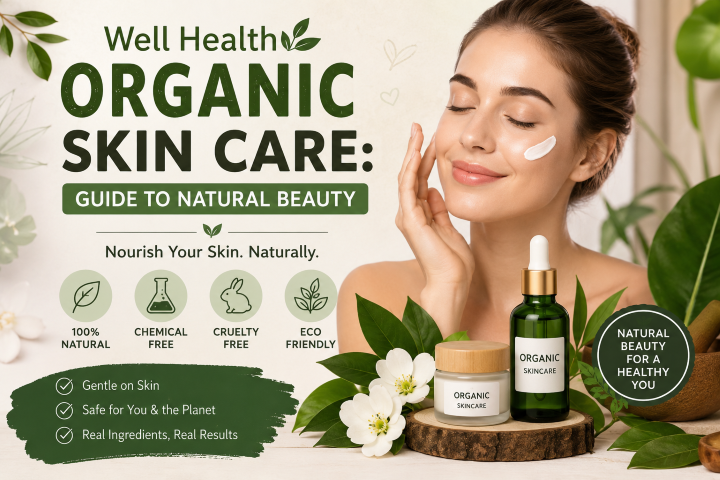
Skin is the body’s largest organ, and what you put on it matters just as much as what you put in it. Over the past few years, “well health organic skin care” has become one of the most searched phrases among people who want to move away from synthetic, chemical-laden products and toward something gentler, cleaner, and more sustainable. This guide breaks down everything you need to know about organic skin care — what it actually means, why it matters for your health, which ingredients to look for (and avoid), and how to build a routine that keeps your skin glowing for years to come.
What Does “Organic Skin Care” Actually Mean?
The term “organic” gets thrown around loosely in the beauty industry, so it’s worth clarifying what it really means before you start shopping.
Organic skin care refers to products formulated with ingredients that are grown and processed without synthetic pesticides, herbicides, genetically modified organisms (GMOs), or artificial fertilizers. Instead of petroleum-derived compounds, parabens, sulfates, and synthetic fragrances, organic formulations rely on plant extracts, botanical oils, herbal infusions, and naturally derived preservatives.
For a product to be legally labeled “certified organic” in most regions, a significant percentage of its ingredients — often 70% or more by weight, excluding water and salt — must be certified organic by an accredited body such as USDA Organic, COSMOS, or Ecocert. This is an important distinction because many products marketed as “natural” or “clean” are not actually certified organic; they simply avoid a handful of controversial ingredients while still using synthetic fillers.
Understanding this distinction is the first step toward practicing genuine well health organic skin care rather than falling for greenwashed marketing.
Why Organic Skin Care Matters for Your Overall Wellness
Skin care isn’t just about vanity — it’s deeply connected to your overall health and wellness. Your skin absorbs a portion of whatever you apply to it, and over years of daily use, that adds up. Here’s why choosing organic matters.
1. Fewer Harmful Chemical Exposures
Many conventional skin care products contain parabens, phthalates, sulfates, synthetic dyes, and artificial fragrances. Research has raised concerns about the potential hormone-disrupting effects of some of these compounds when absorbed repeatedly over time. Organic products minimize this exposure by relying on ingredients your body recognizes and can process more naturally.
2. Gentler on Sensitive Skin
Because organic formulations typically skip harsh synthetic additives, they tend to be gentler on sensitive, reactive, or easily irritated skin. Botanical ingredients like aloe vera, chamomile, and calendula are known for their soothing properties and lower likelihood of triggering allergic reactions compared to synthetic alternatives.
3. Richer in Naturally Occurring Nutrients
Plant-based oils and extracts are often naturally rich in antioxidants, vitamins, and essential fatty acids that support the skin barrier. Ingredients such as rosehip oil, jojoba oil, and green tea extract deliver nutrients in a form your skin can readily use, rather than isolated synthetic compounds.
4. Better for the Environment
Organic farming practices avoid synthetic pesticides and prioritize soil health, which reduces the environmental footprint of skin care production. Many organic brands also pair their formulations with sustainable packaging and cruelty-free practices, making the choice better not just for you but for the planet.
5. A Growing, Well-Researched Industry
The clean beauty movement is no longer a niche trend — it’s a major market force. Organic and natural personal care products are seeing sustained double-digit growth as more consumers prioritize preventive skin health and transparency in ingredient sourcing. This growth has pushed brands to invest more heavily in efficacy testing, so today’s organic products are often just as high-performing as their conventional counterparts.
Key Organic Ingredients to Look For
Not all “natural” ingredients are created equal. Some have decades of research behind them, while others are more marketing buzzwords than proven actives. Below are some of the most well-regarded organic ingredients worth seeking out.
Aloe Vera
A staple in soothing skincare, aloe vera hydrates without clogging pores and helps calm redness, sunburn, and inflammation. It’s an excellent base ingredient for sensitive or acne-prone skin.
Jojoba Oil
Structurally similar to the skin’s natural sebum, jojoba oil absorbs quickly and helps balance oil production. It works well for both dry and oily skin types, making it one of the most versatile organic carrier oils available.
Rosehip Seed Oil
Rich in vitamin A and essential fatty acids, rosehip oil is prized for its ability to support skin renewal, improve tone and texture, and reduce the appearance of scarring and fine lines.
Green Tea Extract
Packed with polyphenols and antioxidants, green tea extract helps protect skin from environmental stressors like UV exposure and pollution while calming inflammation.
Shea Butter
A deeply moisturizing ingredient loaded with vitamins A and E, shea butter forms a protective barrier on the skin, making it ideal for dry climates or winter skin care routines.
Turmeric
Known for its anti-inflammatory and antioxidant properties, turmeric has been used for centuries in traditional skin care practices to brighten skin tone and calm irritation.
Chamomile and Calendula
Both are gentle botanical extracts traditionally used to soothe irritated or reactive skin, making them popular in organic formulations designed for sensitive skin types.
Hyaluronic Acid (Plant-Derived)
While hyaluronic acid can be synthesized, plant-fermented versions are now widely used in organic formulations to draw moisture into the skin and plump fine lines.
Ingredients to Avoid in Conventional Skin Care
Part of practicing well health organic skin care is learning to read ingredient labels critically. Watch out for:
- Parabens (methylparaben, propylparaben) — synthetic preservatives linked to potential hormone disruption
- Sulfates (sodium lauryl sulfate) — harsh detergents that can strip the skin’s natural oils
- Synthetic fragrances — often a blanket term for dozens of undisclosed chemical compounds
- Phthalates — used to make fragrances last longer, with possible endocrine-disrupting effects
- Formaldehyde-releasing preservatives — used to extend shelf life but linked to skin irritation
- Mineral oil and petrolatum — derived from petroleum; while not inherently dangerous, they don’t offer the nutrient density of plant-based alternatives
Building a Well Health Organic Skin Care Routine
A good organic skin care routine doesn’t need to be complicated. In fact, simplicity is often better — giving your skin fewer, higher-quality products to work with rather than overwhelming it with a dozen steps. Here’s a foundational routine you can build on.
Step 1: Gentle Organic Cleansing
Start with a sulfate-free, organic cleanser suited to your skin type. Cream-based cleansers work well for dry or sensitive skin, while gel-based organic cleansers with ingredients like green tea or witch hazel are better for oily or acne-prone skin. Cleanse morning and night to remove impurities without stripping your skin’s natural barrier.
Step 2: Toning With Natural Astringents
A toner made with rose water, witch hazel, or aloe vera helps balance your skin’s pH after cleansing and preps it to better absorb the products that follow. Avoid alcohol-based toners, which can be overly drying even when derived from natural sources.
Step 3: Targeted Organic Serums
Serums are where you can address specific concerns — hydration, brightening, anti-aging, or acne. Look for organic serums featuring vitamin C (from citrus or camu camu), niacinamide, or botanical retinol alternatives like bakuchiol, which offers similar skin-renewing benefits to synthetic retinol without the associated irritation.
Step 4: Moisturizing With Plant-Based Oils and Creams
Lock in hydration with an organic moisturizer suited to your skin type. Lightweight oils like jojoba or squalane work well for oily or combination skin, while richer creams with shea butter or cocoa butter are better for dry skin. This step is essential for maintaining a healthy skin barrier.
Step 5: Daily Sun Protection
No organic skin care routine is complete without sun protection. Mineral sunscreens using zinc oxide or titanium dioxide are widely considered the “cleaner” alternative to chemical sunscreens, and many organic-focused brands now offer broad-spectrum SPF formulas that are both effective and gentle.
Step 6: Weekly Exfoliation and Masks
Once or twice a week, incorporate a gentle exfoliant — think oatmeal, fruit enzymes, or finely ground organic sugar — to remove dead skin cells and support cell turnover. Follow with a hydrating or clarifying mask made from natural clays, honey, or botanical extracts depending on your skin’s needs.
Organic Skin Care by Skin Type
Dry Skin
Focus on rich, emollient ingredients like shea butter, avocado oil, and cocoa butter. Avoid over-cleansing, and consider adding a facial oil as the final step in your nighttime routine to seal in moisture.
Oily and Acne-Prone Skin
Look for lightweight, non-comedogenic oils like jojoba and grapeseed, along with clarifying botanicals such as tea tree oil (used carefully, as it’s potent) and witch hazel. Clay masks with kaolin or bentonite can help absorb excess oil.
Sensitive Skin
Fragrance-free formulations with calming ingredients like chamomile, oat extract, and calendula are ideal. Always patch-test new products, since even natural ingredients can trigger reactions in highly reactive skin.
Combination Skin
A balanced approach works best — lightweight hydration in oilier zones (like the T-zone) and richer moisture in drier areas (like the cheeks). Multi-tasking ingredients like aloe vera and niacinamide tend to work well across combination skin.
Mature Skin
Prioritize antioxidant-rich ingredients like vitamin C, green tea, and rosehip oil, along with gentle exfoliation to support cell turnover. Bakuchiol is a popular organic alternative to retinol for addressing fine lines without excessive irritation.
Common Myths About Organic Skin Care
Organic products don’t work as well as conventional ones: This was true a decade ago when the clean beauty market was in its infancy, but formulation science has advanced significantly. Many organic brands now use biotech-derived actives and clinically tested botanical compounds that perform comparably to synthetic alternatives.
“Natural” and “organic” mean the same thing: Not quite. “Natural” is an unregulated marketing term, while “organic” typically implies certification standards around farming and processing methods. Always check for third-party certification if authenticity matters to you.
Organic products are always safe for everyone: Even natural ingredients can cause allergic reactions or irritation, especially essential oils and potent botanical extracts. Patch testing is always recommended, regardless of how “clean” a product claims to be.
You need dozens of products for good results: A focused routine with a handful of well-chosen organic products often outperforms an overloaded routine using many mediocre ones. Consistency matters more than quantity.
Lifestyle Habits That Support Organic Skin Care
Skin health isn’t only about what you apply topically — your daily habits play a major role too.
- Hydration: Drinking enough water supports your skin’s elasticity and overall function from within.
- Diet: A diet rich in antioxidants, healthy fats, and vitamins (think leafy greens, berries, nuts, and fatty fish) supports skin repair and resilience.
- Sleep: Your skin repairs itself overnight, so consistent, quality sleep is one of the most underrated skin care tools available.
- Stress management: Chronic stress can trigger hormonal changes that worsen acne, eczema, and premature aging. Practices like meditation, exercise, and adequate rest all support healthier skin.
- Sun safety: Beyond sunscreen, wearing protective clothing and seeking shade during peak UV hours helps prevent long-term sun damage.
How to Choose a Genuinely Organic Brand
With the organic skin care market projected to keep growing rapidly worldwide, more brands are entering the space — not all with equally honest practices. Here’s how to vet a brand before you buy:
- Check for certification — Look for USDA Organic, COSMOS, or Ecocert seals rather than relying on packaging language alone.
- Read the ingredient list — A short, recognizable ingredient list is usually a good sign; be wary of vague terms like “fragrance” or “parfum” that can hide synthetic additives.
- Research sourcing practices — Reputable organic brands are typically transparent about where they source their botanicals and how they test their products.
- Look for third-party reviews and dermatological testing — Genuine organic brands often invest in clinical or dermatologist testing to back up their efficacy claims.
- Consider packaging and sustainability — Many organic brands pair clean formulations with eco-friendly packaging, reflecting a broader commitment to wellness and sustainability.
Frequently Asked Questions
Is organic skin care better for acne-prone skin? It can be, since many organic formulations avoid pore-clogging synthetic fillers and harsh detergents. However, results vary by individual, and some botanical ingredients can still be comedogenic, so it’s important to check specific ingredients rather than assuming all organic products are automatically non-comedogenic.
Can organic skin care help with anti-aging? Yes. Ingredients like rosehip oil, vitamin C, and bakuchiol have research supporting their role in supporting collagen production, improving skin texture, and reducing the appearance of fine lines.
Is organic skin care safe during pregnancy? Many organic products are formulated without synthetic chemicals that are typically discouraged during pregnancy, such as retinoids and certain acids. However, some essential oils and botanical extracts are not recommended during pregnancy, so it’s important to consult your healthcare provider and check ingredient lists carefully.
How long does it take to see results from switching to organic skin care? Most people notice changes in skin texture and hydration within four to six weeks of consistent use, though deeper concerns like hyperpigmentation or fine lines may take longer — often eight to twelve weeks — to show visible improvement.
Are organic skin care products more expensive? They can be, largely due to the cost of sourcing certified organic ingredients and smaller-batch production. However, prices vary widely, and there are increasingly affordable organic options available as the market matures.
The Science Behind Organic Skin Care: How Your Skin Actually Absorbs Ingredients
To understand why organic formulations can make a meaningful difference, it helps to understand a bit about skin biology. Your skin is made up of three primary layers: the epidermis (outer barrier), the dermis (where collagen and elastin live), and the hypodermis (fat layer). The outermost layer, the stratum corneum, acts as a protective barrier, but it’s also semi-permeable — meaning certain molecules can pass through it and reach deeper layers or even enter the bloodstream in small amounts.
Smaller, lipid-soluble molecules tend to penetrate more easily than larger, water-soluble ones. This is why many synthetic preservatives and fragrance compounds — which are often small, fat-soluble molecules — can penetrate the skin barrier more readily than intended, prompting some researchers to study their cumulative effects with repeated daily use. Plant-based oils, on the other hand, often contain fatty acid profiles similar to the skin’s own lipids, allowing them to integrate into the skin barrier more harmoniously rather than disrupting it.
This is also why “barrier repair” has become such a central concept in modern skin care. A healthy, intact skin barrier keeps moisture in and irritants out. Organic ingredients like ceramide-rich plant oils, shea butter, and squalane (often derived from olives in organic formulations) support this barrier function without introducing the kind of harsh surfactants that can strip it over time.
Organic Skin Care Across the Seasons
Your skin’s needs shift with the seasons, and a well health organic skin care routine should shift with them too.
Spring
As humidity rises, lighten up heavier winter creams in favor of lightweight organic gels or lotions. This is also a good time to reintroduce gentle exfoliation to slough off dry winter skin and prep for lighter makeup or sunscreen application.
Summer
Focus on antioxidant protection and diligent SPF use. Organic vitamin C serums pair well with mineral sunscreens to combat free radical damage from UV exposure and pollution. Lightweight, non-greasy moisturizers with aloe vera or watermelon extract help skin stay hydrated without feeling heavy in the heat.
Fall
As temperatures drop, skin often needs a boost in barrier support. Transition toward richer organic moisturizers and consider adding a facial oil back into your nighttime routine to counteract the drying effects of lower humidity and indoor heating.
Winter
Cold air and indoor heating can be particularly harsh on skin, leading to flakiness and increased sensitivity. Organic butters like shea and cocoa, along with occlusive plant oils like jojoba, help lock in moisture. Consider using a humidifier alongside your skin care routine to support overall hydration.
A Sample 7-Day Organic Skin Care Reset
If you’re transitioning from conventional products to an organic routine, easing in gradually can help minimize irritation and give you a clearer sense of what’s working. Here’s a simple week-long framework:
- Days 1–2: Swap your cleanser for a gentle, organic, sulfate-free formula. Keep the rest of your routine the same to isolate any reactions.
- Days 3–4: Introduce an organic moisturizer suited to your skin type, applied both morning and night.
- And Day 5: Add a lightweight organic serum targeting your primary concern (hydration, brightening, or anti-aging).
- Day 6: Incorporate a gentle weekly exfoliant or mask appropriate for your skin type.
- Day 7: Evaluate how your skin feels — hydration levels, texture, sensitivity — and adjust product amounts or frequency as needed before continuing the routine long-term.
This gradual approach allows your skin to adjust and makes it easier to pinpoint which products are delivering results versus which might need to be swapped out.
The Role of Certifications and Labels
Navigating organic skin care labels can be confusing, so here’s a quick breakdown of what some of the most common certifications actually mean:
- USDA Organic: Requires at least 95% certified organic ingredients (excluding water and salt) for the “organic” label, or 70%+ for “made with organic ingredients.”
- COSMOS Organic: A European standard requiring a minimum percentage of organic ingredients along with restrictions on processing methods and packaging.
- Ecocert: Certifies both organic and natural cosmetics based on ingredient sourcing and environmental impact.
- MADE SAFE: Focuses on screening out ingredients linked to health concerns, rather than certifying organic content specifically.
- Leaping Bunny / Cruelty-Free: Confirms no animal testing was used in product development, which often overlaps with organic and clean beauty brands but is a separate certification.
Understanding these distinctions helps you make more informed choices and avoid falling for vague marketing claims like “natural-inspired” or “clean formula,” which carry no regulatory weight.
Common Mistakes to Avoid When Switching to Organic Skin Care
Over-exfoliating with natural acids: Just because an exfoliant is derived from fruit enzymes or organic acids doesn’t mean it can’t be overused. Stick to one to two exfoliation sessions per week to avoid compromising your skin barrier.
Assuming more products equal better results: Layering too many actives — even organic ones — can overwhelm the skin and lead to irritation. A streamlined routine with a few well-chosen products is generally more effective.
Ignoring patch testing: Essential oils and potent botanical extracts can cause reactions just like synthetic ingredients can. Always patch test new products on a small area of skin before full application.
Expecting overnight results: Organic skin care tends to work with your skin’s natural processes rather than forcing rapid change, which often means results build gradually over weeks rather than overnight.
Overlooking sun protection: Some natural ingredients, like citrus extracts, can increase photosensitivity. Pairing your organic routine with consistent SPF use is essential, regardless of season.
Final Thoughts
Well health organic skin care isn’t just a passing beauty trend — it reflects a broader shift toward mindful, ingredient-conscious living. By understanding what “organic” really means, learning which ingredients genuinely support skin health, and building a routine tailored to your unique skin type, you can achieve healthier, more radiant skin while minimizing your exposure to unnecessary synthetic chemicals.
The path to great skin doesn’t require an overflowing bathroom cabinet or an expensive twelve-step routine. It requires consistency, quality ingredients, and a willingness to listen to what your skin actually needs. Start simple, choose products with intention, and let your skin’s natural health shine through.