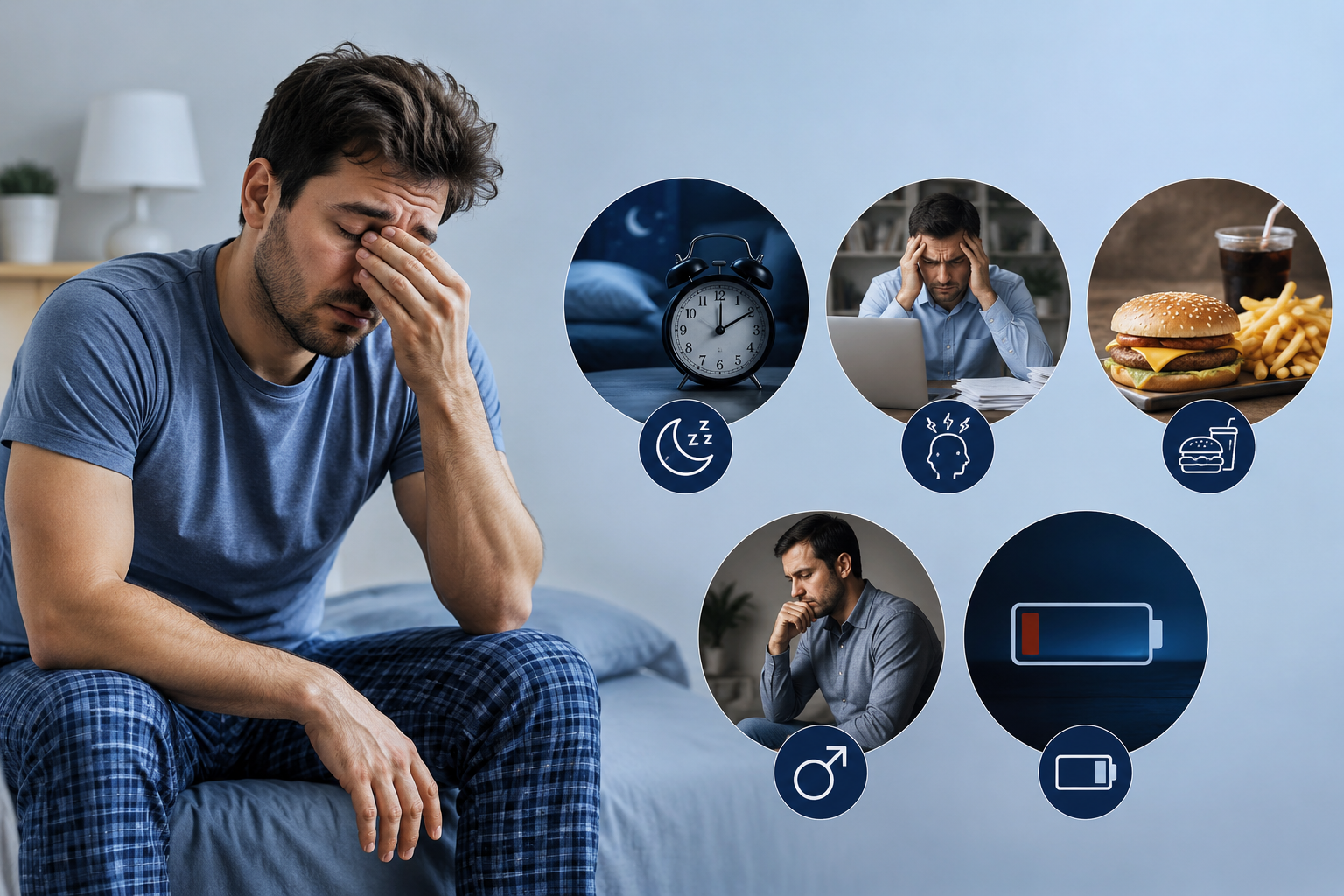
Why Am I So Tired All the Time? You get a full night’s sleep. You eat reasonably well. You’re not doing anything unusual. And yet, by mid-afternoon, you’re running on empty again. If that sounds familiar, you’re not alone. Chronic fatigue is one of the most common complaints men bring up in doctor’s offices, and it’s also one of the most under-investigated, because men are statistically less likely to seek medical evaluation for tiredness than women. That means the underlying cause often goes undetected for years.
Here’s the honest truth: “feeling tired” isn’t a diagnosis. It’s a symptom, and it can point to a dozen different things. Let’s walk through the real, evidence-based causes, starting with the most common ones.
1. Low Testosterone
This is one of the most overlooked causes of ongoing fatigue in men, and for good reason — testosterone does far more than just regulate sex drive. It plays a real role in energy production, muscle maintenance, mood regulation, and mental clarity.
Here’s something worth knowing: testosterone levels naturally decline by roughly 1% per year after age 30. So if you’re feeling more drained than you used to, part of that may simply be biology. Men with low testosterone often report feeling tired regardless of how much they sleep, along with other signs like:
- Reduced motivation and difficulty concentrating (often described as “brain fog”)
- Decreased muscle mass and increased body fat
- Lower sex drive or fewer erections
- Irritability or low mood
One important caution here: fatigue alone doesn’t confirm low testosterone. It’s what doctors call a “non-specific symptom” — meaning it overlaps with many other conditions. If low testosterone is genuinely the cause, it’s usually accompanied by several of the symptoms above, not just tiredness on its own. The only way to know for sure is a proper blood test ordered by a doctor, not a walk-in “low T” clinic pushing supplements.
2. Sleep Apnea (Even If You Think You Sleep Fine)
This one surprises a lot of men. You might be getting eight hours in bed and still waking up exhausted — and the reason could be that you’re not actually getting eight hours of quality sleep.
Men are two to three times more likely than women to have obstructive sleep apnea, a condition where breathing repeatedly stops and starts during sleep. It fragments your sleep cycle without you fully waking up, so you might have no memory of it happening, yet your body never gets the deep, restorative rest it needs.
Warning signs worth paying attention to:
- Loud snoring (especially if a partner has mentioned it)
- Waking up with headaches
- Feeling unrefreshed no matter how many hours you slept
- Daytime sleepiness, even during activities that should keep you alert
If this sounds like you, a home sleep study is a simple, non-invasive way to confirm or rule it out.
3. Depression (Even Without Feeling “Sad”)
Depression is one of the most common — and most under-recognized — causes of fatigue in men. Here’s the part that catches people off guard: you don’t need to feel sad or tearful to be dealing with it.
Depression can show up as low energy, trouble concentrating, sleeping more or less than usual, and losing interest in things you used to enjoy. It affects motivation and energy directly, and it can also disrupt sleep, appetite, and exercise habits — all of which compound the tiredness further. Some medications used to treat depression can also cause fatigue as a side effect, which can make the picture even more confusing.
Anxiety deserves a mention here too. When your mind is constantly on alert, your body stays in a low-grade state of tension, which makes genuine rest hard to come by, even when you’re technically resting.
4. Poor Sleep Habits (The Obvious One That’s Easy to Ignore)
Sometimes the answer really is that simple — but “simple” doesn’t mean “easy to fix.” Irregular sleep schedules, late-night screen use, working night shifts, or just consistently cutting sleep short all add up over time. The effects are cumulative, which is why a few rough nights can turn into weeks of feeling foggy and drained.
5. Chronic Health Conditions
Persistent fatigue can also be a signal from your body that something more specific is going on. Conditions linked to chronic tiredness include:
- Cardiovascular disease and heart failure
- Diabetes and blood sugar imbalances
- Thyroid dysfunction (often underdiagnosed in men, since it’s frequently seen as a “women’s condition”)
- Anemia (low iron), which isn’t just a concern for women
- Chronic infections or inflammatory conditions
- Kidney or liver disease
If your fatigue is severe, persistent, or paired with other unexplained symptoms like unexpected weight change, pain, or dizziness, this is worth ruling out with a doctor rather than guessing.
6. Stress and Elevated Cortisol
Chronic stress keeps your body’s cortisol levels elevated for extended periods, and that constant state of alertness is, quite literally, exhausting. Add poor eating habits and skipped workouts — both common responses to high stress — and you end up with a cycle that reinforces itself.
What Actually Helps
The research points to a few consistent, non-medication strategies that make a real difference:
Resistance training. Somewhat counterintuitively, lifting weights is considered one of the most effective non-pharmaceutical ways to combat fatigue in men. It supports healthy testosterone levels, improves sleep quality, and boosts cellular energy production over time.
Get evaluated, don’t just guess. If fatigue has lasted more than a few weeks despite reasonable sleep, diet, and stress management, it’s worth requesting bloodwork — testosterone, thyroid function, and iron levels are a reasonable starting point for most doctors.
Treat sleep as non-negotiable. Consistent sleep and wake times matter more than most people expect. If you snore or wake up unrefreshed, ask about a sleep study before assuming it’s “just stress.”
When to See a Doctor
Reach out to a healthcare provider if:
- Fatigue has lasted more than two to three weeks without improvement
- You’ve made reasonable lifestyle changes and nothing has helped
- Tiredness comes with other symptoms — unexplained weight change, mood changes, pain, or shortness of breath
- You suspect sleep apnea (loud snoring, morning headaches, daytime sleepiness)
Frequently Asked Questions
Q: Why am I tired all the time even after sleeping 8 hours?
A: This is often linked to poor sleep quality rather than quantity — sleep apnea is a common but frequently missed cause, especially in men. Low testosterone, depression, and chronic stress can also cause this pattern.
Q: Can low testosterone really cause constant fatigue?
A: Yes, but fatigue alone isn’t enough to confirm it. Low testosterone-related fatigue is usually accompanied by other symptoms like reduced libido, muscle loss, or low mood. A blood test is the only reliable way to confirm it.
Q: Is fatigue a symptom of depression even if I don’t feel sad?
A: Yes. Depression can show up primarily as low energy, poor concentration, and loss of interest in activities, without obvious sadness. This is especially common in men, who are often less likely to recognize or report depression.
Q: When should I worry about being tired all the time?
A: If fatigue lasts more than two to three weeks, doesn’t improve with better sleep and lifestyle habits, or comes with other symptoms, it’s time to see a doctor rather than waiting it out.
Related Reads
- How Men Can Lose Weight Fast (and Safely): A Science-Backed Guide
- Men’s Mental Health Month: Why June Matters More Than Ever
- Best Morning Routine for Men’s Health
- Men’s Health Guide 2026: Fitness, Mental Health & Nutrition
Conclusion
Chronic fatigue is common, but it’s not something to just accept as “part of getting older.” It’s your body sending a signal, and that signal can point to something as fixable as poor sleep habits, or something that genuinely needs medical attention, like low testosterone, sleep apnea, or depression. The most important step isn’t diagnosing yourself from an article — it’s taking the symptom seriously enough to get properly evaluated, especially since men are statistically less likely to do so.
This article is based on publicly available medical sources, including Cleveland Clinic, Healthline, and peer-reviewed research. It is intended for general education and is not a substitute for professional medical advice. Please consult a qualified healthcare provider for any concerns about your specific health situation.